REVIEW · NARVIK
From Narvik: The Northern Lights Arctic Train Guided Tour
Book on GetYourGuide →Operated by Norwegian Travel · Bookable on GetYourGuide
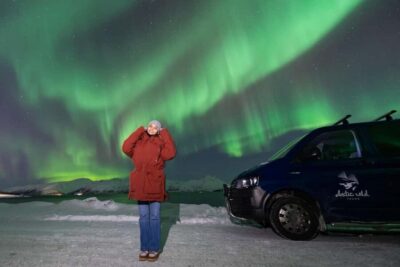
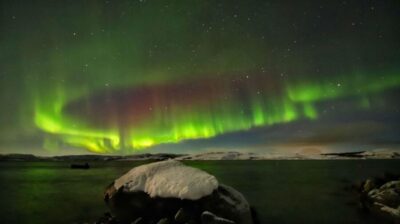
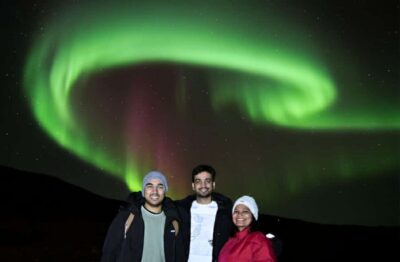
Night trains make the aurora feel close. This Narvik guided trip takes you far past city lights on the historic Ofoten Railway, aiming you straight at one of the darker pockets of the Arctic. I love the warmth-and-wait setup: you pause at remote Katterat for a campfire, a lavvu (traditional tent), and hot drinks while you scan the sky. I also like that you’re not sent out blind; there’s photo guidance plus an included northern lights documentary and stories that make what you’re seeing feel grounded. One possible drawback: the lights are never guaranteed, since it’s a natural phenomenon and the sky can be stubborn.
You’ll spend about 45 minutes on the train, then around 1.5 hours at Katterat at 373 meters above sea level, where there’s no road access and the darkness is the point. The experience is short at just 3 hours total, so you’ll want to show up ready for cold and curious: layers, patience, and a camera that can handle winter nights.
In This Review
- Key highlights worth aiming for
- Narvik to Katterat: the Arctic train timing that works
- Why Katterat feels so dark (and that’s the whole trick)
- Campfire warmth and the lavvu: waiting without suffering
- Train windows, seating choices, and how to spot the first lights
- Photo tips that actually help at night
- The guide’s role: stories that make the railway meaningful
- What happens if the northern lights don’t show
- Price and value: is $156 worth it?
- Who this tour suits best (and who should think twice)
- Should you book the Narvik Northern Lights Arctic Train tour?
- FAQ
- How long is the Northern Lights Arctic Train Guided Tour?
- Where does the tour start and where does it end?
- Is the tour guided in English?
- Is northern lights viewing guaranteed?
- What is included in the ticket price?
- Are thermal suits included?
- What should I bring for the cold in Katterat?
- What do you do at Katterat during the stop?
- Is the tour suitable for kids or wheelchair users?
- What’s the cancellation policy?
Key highlights worth aiming for
- Historic Ofoten Railway ride that turns into a moving viewing platform through the dark Arctic country
- Katterat at 373 meters with no road access, giving you serious darkness for aurora spotting
- Campfire + lavvu shelter so you warm up between glances at the sky
- Heated-tent waiting used by guides to help you avoid freezing while watching for the right moment
- Museum and old mountain village visit at Katterat that adds meaning beyond the lights
- Photo tips and tripod-friendly advice so you can actually capture what you see
Narvik to Katterat: the Arctic train timing that works
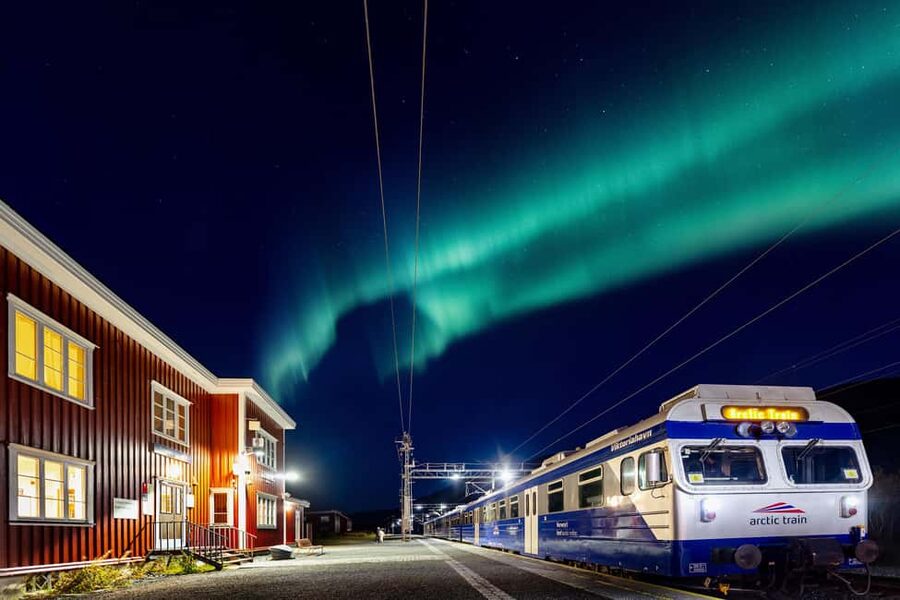
This tour is built around a simple truth: the northern lights are easiest to spot when you’re far from light pollution and willing to wait in the cold. The schedule is tight enough to feel efficient, but not so rushed that you’re constantly shuffling around.
You start at Narvik station, then hop on for about 45 minutes along the route that’s famous for how it cuts through the far north. Even before you reach Katterat, the train ride is part of the experience. People consistently describe the lighting on board as subtle enough to help you see out, and that matters—if the inside lights are too bright, your eyes never fully adjust to the night sky.
Then you get your stop at Katterat for about 1.5 hours. That window is a sweet spot: long enough for a guided explanation, a proper pause by the fire, and time to check the sky without feeling trapped outdoors the whole time. After that, it’s back on the train for another 45 minutes to return to Narvik, and you’re done.
You can also read our reviews of more tours and experiences in Narvik.
Why Katterat feels so dark (and that’s the whole trick)
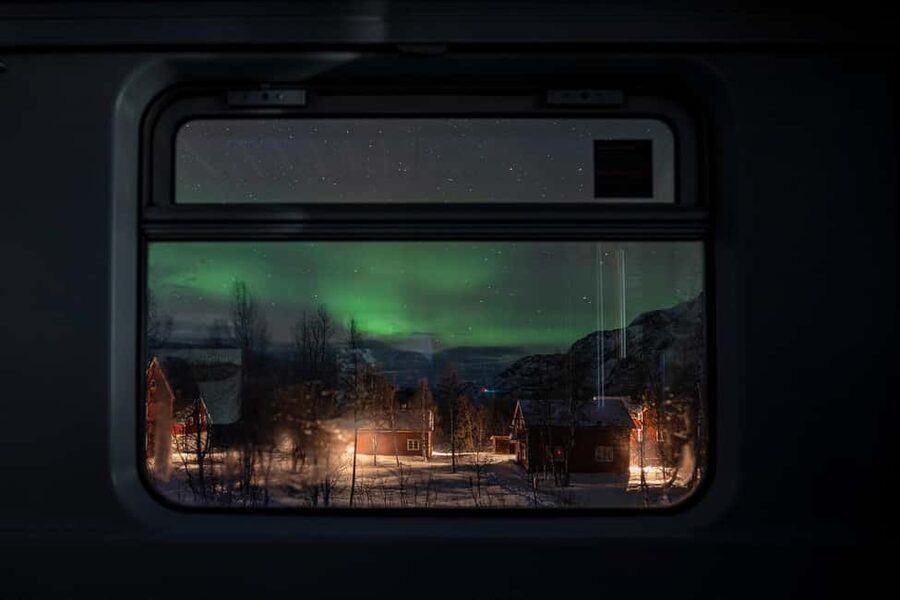
Katterat is the kind of place you reach by train because roads just aren’t the point. The station sits 373 meters above sea level, and the area has no road access, which helps keep light pollution down. For aurora hunting, darkness isn’t a vibe—it’s the tool.
Once you step off, you’re in a remote mountain setting where the sky usually has more depth. The tour is clearly designed around that: you’re not just passing through. You’re there long enough to let your eyes adjust, listen to what the guide shares, warm up, and check again.
This remote stop also changes how the night feels. Instead of city noise or street glow, you get quiet. Even when the aurora doesn’t perform, that kind of dark sky can still be a memorable shift from everyday life.
Campfire warmth and the lavvu: waiting without suffering
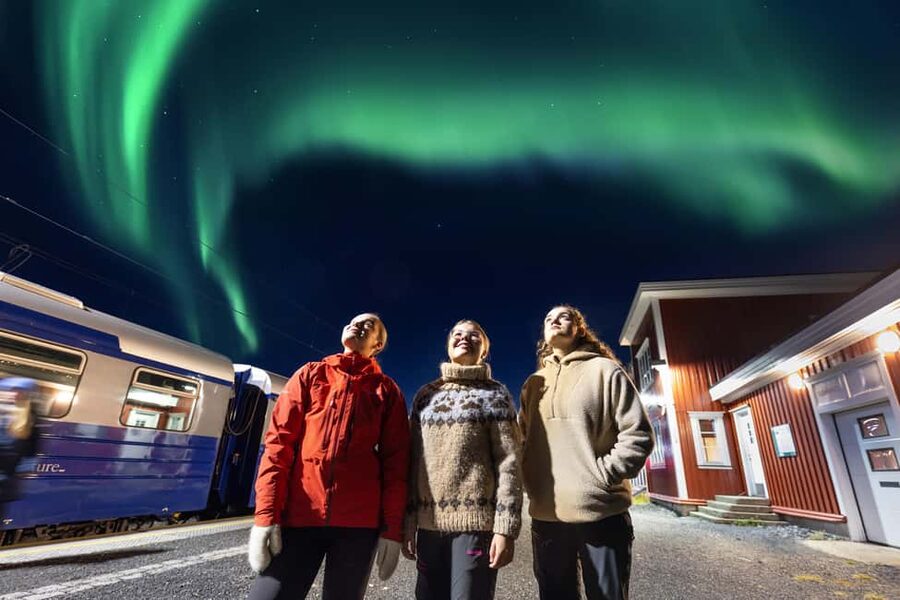
Here’s what I’d call the smartest part of the tour design: you don’t only “hope” for the lights while you freeze. At Katterat, you gather around a campfire under the open sky, with a nearby lavvu to retreat into for extra warmth.
Hot drinks and a light snack keep you going while you wait. That sounds basic, but it matters in sub-Arctic conditions. When your hands are warm, your photos improve, and your attention stays on the sky instead of drifting to your next layer.
One additional detail that shows up in how the guide runs the timing: there’s often a heated tent waiting strategy. The idea is to warm up first, then step outside only when the guides think it’s worth your time. That approach reduces the cold shock and helps you stay focused.
And yes, you might still have long minutes where nothing happens. That’s aurora hunting. The campfire setup is what keeps those minutes from turning into a trial.
Train windows, seating choices, and how to spot the first lights
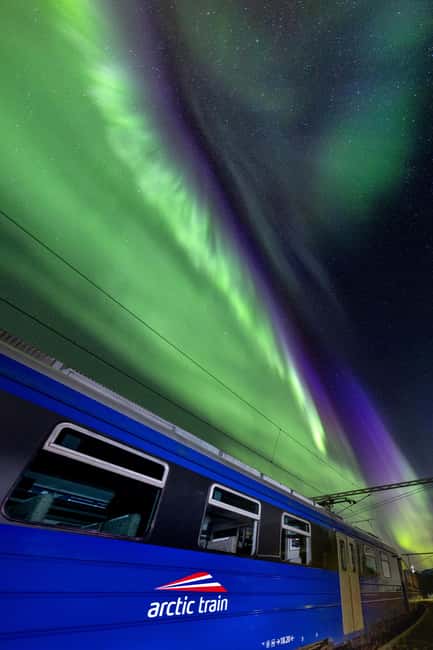
On a night tour, the small choices matter more than you’d think. Aurora can appear quickly, then fade, then return. If you’re in the wrong place at the wrong moment, you can miss the earliest hints.
I’d aim to think about where you’ll look during the ride and at the stop. The train gives you moving views as you travel through the dark, and Katterat gives you the fixed point where you can scan the horizon. If your first seat choice doesn’t feel like it gives you a clear view, adjust early—don’t wait until you’re already deep into the stop.
Also, don’t underestimate eye adjustment. Your camera might struggle if you keep switching between bright areas and dark areas. The tour’s plan helps with that by using calmer inside lighting on the train and by giving you a rhythm: warm up, scan, warm up again.
Photo tips that actually help at night
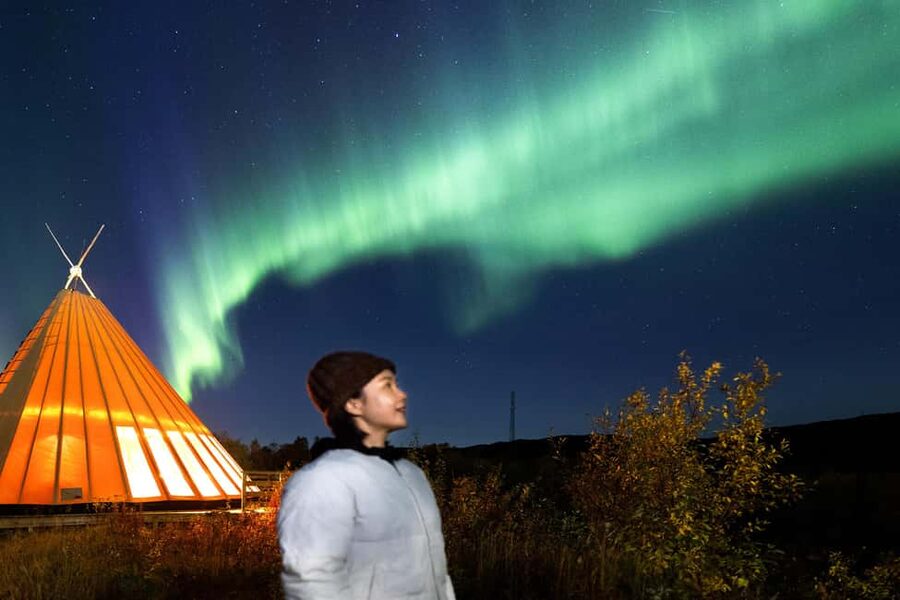
This tour includes photo tips, and the advice you get is practical for the specific challenge of winter aurora photos: you need stability, control, and the right expectations. You’ll likely want a camera that can handle low light and a way to keep it from shaking.
That’s why bringing a tripod is specifically on the list of recommended items. Aurora can move across the sky, and slow hand-held shooting tends to turn into blurry results. A tripod lets you focus on timing and framing instead of fighting physics.
You should also bring a hat, scarf, and warm socks, because you’ll be outside long enough to feel it in your extremities. Warm hands also help with camera settings and keeping your gear manageable.
And one more thing: the tour provides a northern lights documentary as part of the experience. That’s useful because it sets expectations about how the aurora behaves. In practice, it helps you interpret what you’re seeing instead of guessing.
The guide’s role: stories that make the railway meaningful
The aurora is the headline, but the guide makes it make sense. At Katterat, you’ll hear stories tied to the railway’s history, the surrounding Arctic area, and even everyday life in the far north. That context turns your waiting time into something more than just standing around.
You’ll also get included visits at the station area, including an old mountain village and a museum at Katterat. Those stops matter because they anchor the whole night in human scale—people have lived with this terrain and weather for a long time, and the railway is part of that story.
If you end up with a guide like Anajolie (one name that’s shown up positively), you’ll likely enjoy it even more. People describe her presentations as engaging and helpful, and that kind of energy is contagious when you’re trying to spot faint light in a dark sky.
What happens if the northern lights don’t show
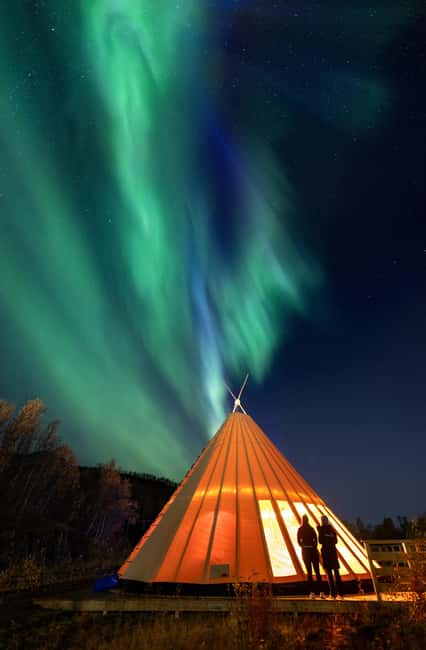
You’re paying for a chance, not a guarantee. The tour is transparent about that, and it’s the right way to be honest. Sometimes the sky just won’t cooperate.
When that happens, you still get a real experience: the Arctic train ride, the deep darkness at Katterat, a warm campfire pause with snacks and hot drinks, plus the museum and guided cultural context. More than one person notes that even without aurora, the night can still be full of stars and quiet wonder.
So if your goal is strictly to see the aurora at all costs, you should treat this as a gamble with good odds because of the location—and as a night out in the far north even if the sky chooses silence.
Price and value: is $156 worth it?
At $156 per person for a total of 3 hours, the value comes from what’s included rather than from how long it lasts. You get roundtrip train transportation, the guided experience, and time at a remote stop optimized for aurora viewing.
Included extras that add real comfort and better results:
- hot drinks and a snack during the stop
- bonfire time and lavvu shelter
- photo tips (useful, not just generic)
- a northern lights documentary
- museum visit at Katterat and an old mountain village visit
What’s not included is also important for value: thermal suits are not part of the package. You’ll need warm weather-appropriate clothing, and the tour specifically suggests bringing tripod, scarf, hat, and thermal clothing. If you already own proper cold-weather gear, you’re in good shape. If you don’t, plan ahead so you’re not improvising at the worst time.
One more value tip: because the night is short, you want to show up early enough to get settled without rushing. If boarding feels disorganized, your best move is to be calm and ready from the start, not waiting until the last second.
Who this tour suits best (and who should think twice)
This works especially well if you:
- want an aurora experience without committing to a full day away
- like guided context and not just waiting in the dark
- enjoy rail travel and want it to feel like an event, not a transfer
- care about photography and bring the gear to try
It’s not suitable for children under 7 and not suitable for wheelchair users, based on the activity details. If you’re traveling with mobility needs, check alternatives that can handle access constraints for the train and remote station environment.
Also, accept that you’re stepping outdoors in Arctic winter conditions. If you hate cold, this tour will still try to help with warmth (campfire and lavvu), but you’ll never fully avoid the cold during aurora season.
Should you book the Narvik Northern Lights Arctic Train tour?
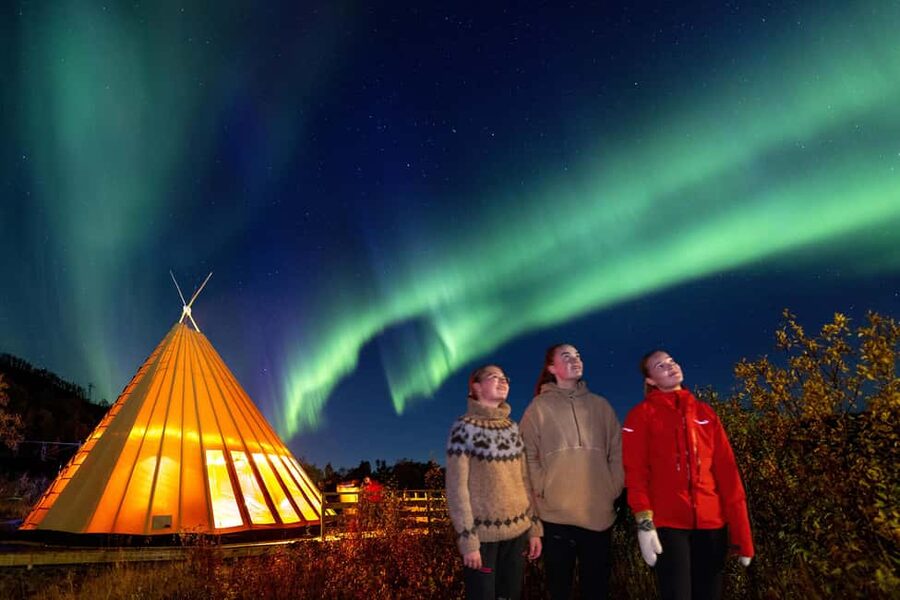
If you want the best shot at darker skies without a long, stressful day, I think this is a strong option. The train-to-Katterat plan is built for aurora viewing, and the comfort layer (campfire, lavvu, heated waiting) makes the short time outdoors much more tolerable.
I’d book if you’re willing to pack properly and treat the lights as a hope, not a guaranteed product. If seeing the lights is everything and you can’t handle the possibility of clouds, you should weigh whether a guaranteed-viewing alternative fits your priorities better.
FAQ
How long is the Northern Lights Arctic Train Guided Tour?
The tour lasts about 3 hours total.
Where does the tour start and where does it end?
It starts at Narvik station and returns to Narvik station.
Is the tour guided in English?
Yes. The live tour guide speaks English.
Is northern lights viewing guaranteed?
No. Northern lights are a natural phenomenon, and the tour does not guarantee if, when, or how strongly they will appear.
What is included in the ticket price?
The price includes a roundtrip ticket, a snack and beverages, bonfire time, photo tips, a guide, a northern lights documentary, a visit to the old mountain village, and a museum visit at Katterat.
Are thermal suits included?
No. Thermal suits are not included.
What should I bring for the cold in Katterat?
Bring a hat, socks, a scarf, weather-appropriate clothing, and a camera. A tripod is also recommended, and thermal clothing is strongly suggested.
What do you do at Katterat during the stop?
You’ll have a photo stop and a guided portion, with time around a campfire and a nearby lavvu for warmth, plus included visits tied to the old mountain village and a museum at Katterat.
Is the tour suitable for kids or wheelchair users?
It’s not suitable for children under 7 and not suitable for wheelchair users.
What’s the cancellation policy?
You can cancel up to 24 hours in advance for a full refund.