REVIEW · CANMORE
Night Adventure with possible stargazing and Aurora chasing
Book on Viator →Operated by Canmore Travel-Moraine Lake and Lake Louise shuttle/bus · Bookable on Viator
You came for the stars, not the stress. This Banff-area night adventure pairs dark-sky stops with real comfort and a telescope.
I love the low-effort setup: you’re bundled up with blankets, and you can actually relax in an inflatable lounger while you look up.
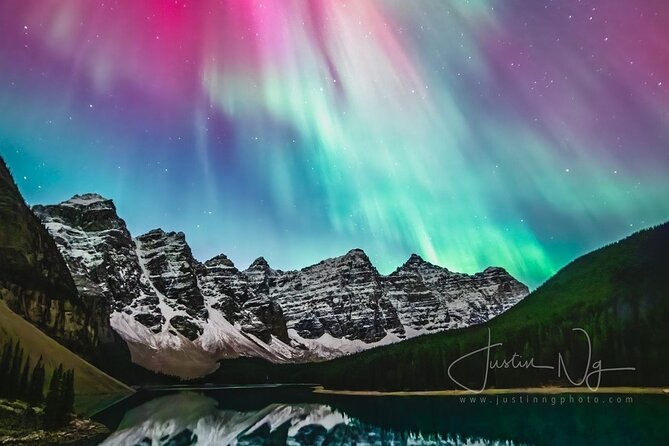
One fair warning: Aurora and clear skies aren’t guaranteed, so go in with flexible expectations and warm layers.
In This Review
- Key things that make this tour worth your time
- Banff night skies without the winter-driving problem
- Getting to the dark-sky base: how the night starts
- Stop in Banff National Park: your warm observation base
- A realistic note about the sky conditions
- Telescope time: what you’ll learn and what you’ll likely see
- Hot chocolate, tea, loungers, and the comfort that makes stargazing possible
- Aurora chasing, with expectations set the right way
- Price and value: what $111.84 is really buying
- Who this tour suits best
- What to wear: your “cold-proof” checklist
- Booking your night: should you do it?
- FAQ
- How long is the Banff night stargazing adventure?
- What are the pickup times from Canmore and Banff?
- Is stargazing or the Aurora Borealis guaranteed?
- What’s included, and do I need a Banff National Park pass?
- What should I bring to stay warm and safe?
- Is it suitable for children, and what happens if weather cancels the tour?
Key things that make this tour worth your time
- Dark-sky route in Banff National Park: you’re taken away from city glow for better sky viewing.
- Telescope time included: you’re not just guessing at constellations.
- Warm drinks on hand: hot tea and hot chocolate keep the wait comfortable.
- Comfy, practical seating: inflatable loungers plus chairs mean less freezing and more star time.
- Small group limit (max 13): you get easier guide attention and less crowd chaos.
- Comfort-first nighttime transport: pickup and drop-off help you avoid a winter night driving headache.
Banff night skies without the winter-driving problem
A stargazing tour is at its best when it’s easy. This one scores points fast because you get pickup and drop-off from Banff or Canmore. That means you’re not white-knuckling dark roads in winter just to sit outdoors for a couple of hours.
You also get a built-in “sit and watch” setup. You’ll arrive at darker areas in and around Banff National Park, then park yourself in a warm base with blankets, headlamps, and loungers. That’s the kind of planning that turns “I hope the sky is good” into “I’ll actually enjoy the night,” no matter how cold it feels.
The other big reason I like this format: the guides manage the timing and the view. You’re given the help to find what’s worth looking for, instead of standing around trying to read the sky alone.
Getting to the dark-sky base: how the night starts
Your tour starts in the evening. The scheduled start time is 7:15 pm, and in Dec 1–Mar 7 the pickup is staggered:
- 7:15 pm pickup from Canmore
- 7:45 pm pickup from Banff
There’s also a 15-minute pickup window. For Canmore/Harvie Heights, they expect you to be ready about 10 minutes before. In Banff, the van arrives about 30 minutes after the posted start time, again with a 15-minute window.
This matters because winter timing can be annoying. Show up late and you’ll lose the best part of your night: settling in before the group moves to the next sky spot.
Once you’re on board, the drive is part of the experience. The goal is simple—get you to places with less light pollution so stars look sharp. And with a group capped at 13 travelers, the night stays organized rather than turning into a parking-lot stampede.
Stop in Banff National Park: your warm observation base
The centerpiece stop is in Banff National Park, where you’ll visit multiple dark-sky locations. You won’t be stuck in just one spot forever. Instead, you’ll move through several viewpoints designed for nighttime viewing.
At the main spot, the crew sets up a comfortable observation area for you. Here’s what makes that part work:
- Inflatable loungers and chairs so you can look upward without contorting.
- Blankets to cut the chill while you wait for your eyes to adjust.
- Headlamps so you can walk safely on uneven terrain.
- Cleats if needed—useful if the ground is icy.
This is also where the group vibe helps. Going out at night alone can feel a little intimidating in the Rockies. With a guide-driven plan, you get structure. You also get the calm confidence of knowing you’re using sensible safety habits outdoors at night—especially when wildlife is possible.
On some nights, you might even catch wildlife sightings like foxes. It’s not the main goal, but it’s a nice bonus when the sky is slow.
A realistic note about the sky conditions
The tour runs under a wide weather range. You might get clear skies, partly cloudy conditions, or even light snow—magical, yes, but it also changes what you can see.
And here’s the key truth the tour team is upfront about: stars and the Aurora Borealis are not guaranteed. If the sky is mainly cloudy, you may still enjoy the warm drinks and the guided sky talk, but you’ll likely see fewer stars.
Telescope time: what you’ll learn and what you’ll likely see
The most praised part of this tour is the sky viewing itself—and specifically, the fact that you’re given real help with a telescope.
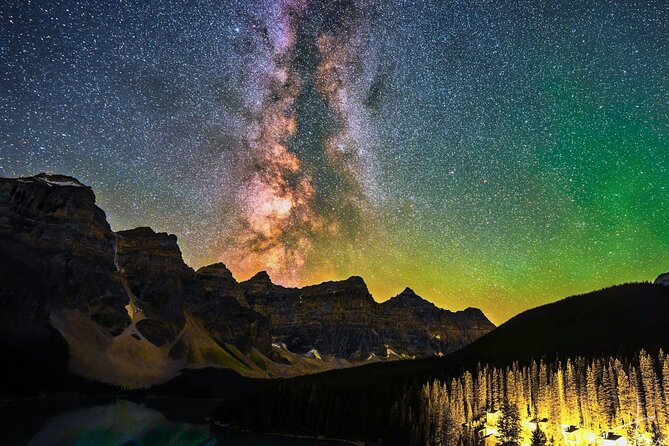
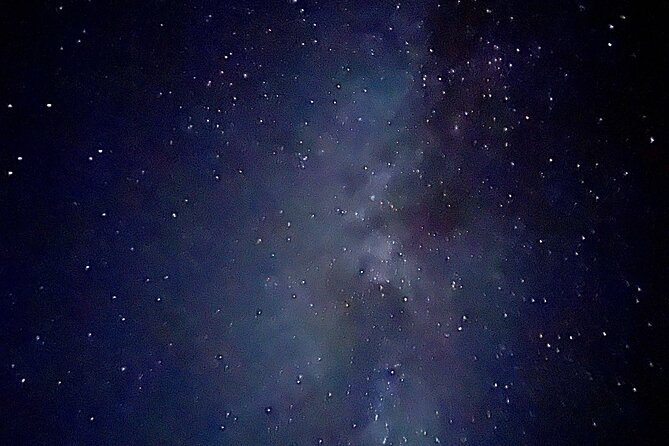
You’ll have telescope use included, and the guides help you connect what you see to what’s out there. On clear nights, that can mean seeing bright planets and details like Jupiter and its moons. With the naked eye, you might also catch the Milky Way’s structure—especially when cloud cover is low.
Even when the sky isn’t perfect, the education is the point. Guides can help you avoid the classic “I stared at the same blank patch of sky for 40 minutes” problem. Instead, you get signposts: what constellations might be visible, where to look, and what the objects mean.
If you’re into photos, the guides also sometimes add small fun extras. I’ve seen this described as light-painting type moments or a surprise smartphone-friendly activity. Even if you’re not a serious photographer, these add a bit of fun to the wait for clear breaks in the clouds.
And yes, you’ll hear a lot of night-sky storytelling. Some nights pair astronomy with local nature notes, including flora, fauna, and bear safety. Bear safety matters here because you’re outside at night in the mountains, and the guides’ job is to keep everyone aware and respectful.
Hot chocolate, tea, loungers, and the comfort that makes stargazing possible
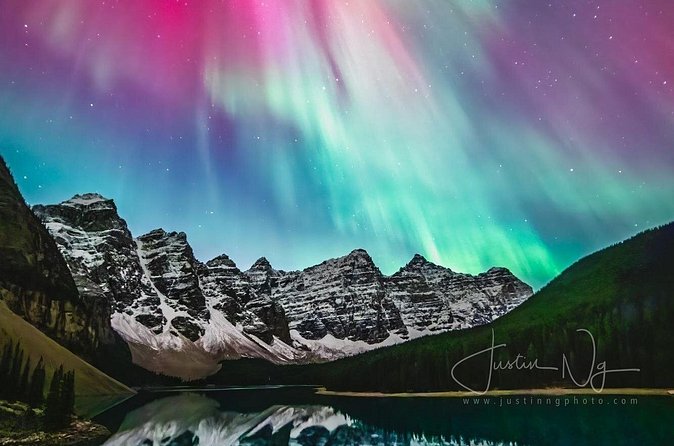
Cold is the enemy of good stargazing. Your hands get stiff. Your nose gets numb. Your attention wanders. This tour fights that problem on purpose.
Included warm drinks are hot chocolate and tea. They’re there to support the waiting, not as an afterthought. Sip something warm, and suddenly those 20 minutes of “is it clearing?” feel manageable.
The comfort setup is also practical:
- You’re given blankets
- You get inflatable loungers for sky watching
- You also have chairs if that’s your preference
- Headlamps help you move without fumbling with a phone flashlight
- Boots and traction are on your to-do list (more on that soon)
In short: you’re not crouched on cold ground hoping your posture holds out.
And if you’ve ever done an outdoor tour that felt like a winter punishment, this is the opposite. Even people who aren’t hardcore astronomy fans often enjoy it because the experience is comfortable enough to stick with it when the sky changes.
Aurora chasing, with expectations set the right way
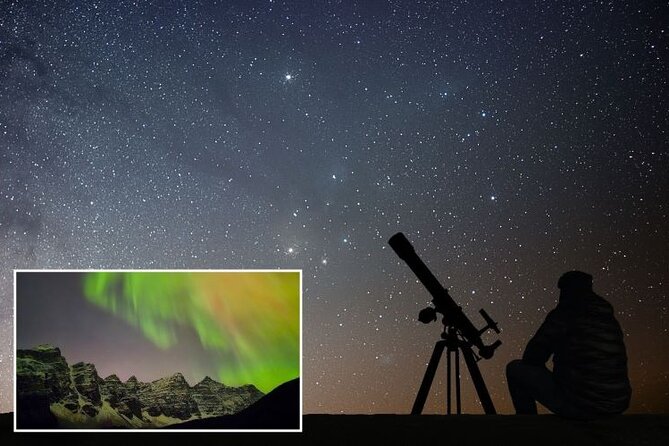
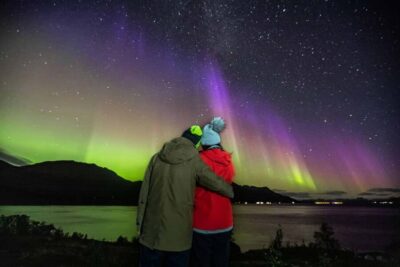
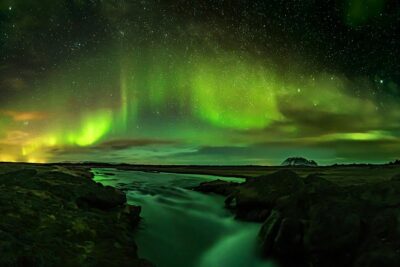
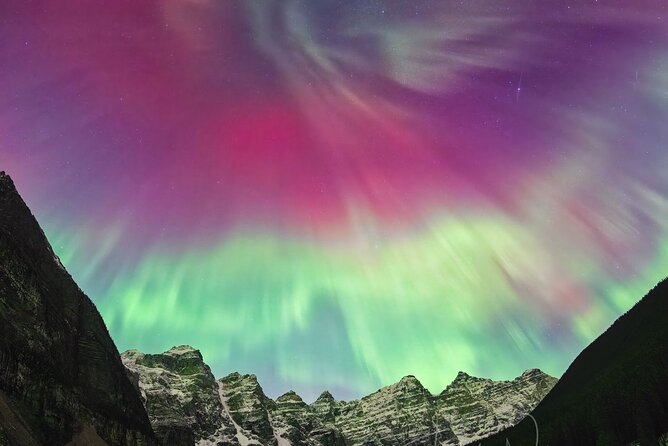
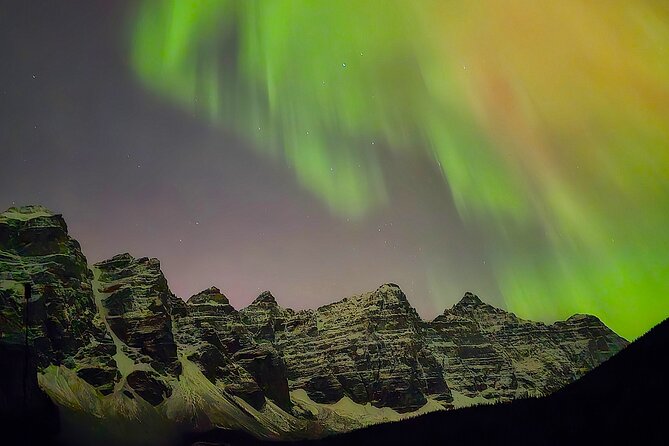
Aurora Borealis is the big dream for Alberta nights. This tour is built for that possibility, but it doesn’t sell you certainty.
You’ll be in darker locations at night, which is what you need for aurora viewing. And you’ll be ready to look quickly when conditions align—clear sky breaks, lower cloud cover, and enough darkness.
But you should book this for stargazing first, aurora second. When the sky is mostly cloudy, the aurora may not show. When you do get a good window, it can be a standout moment.
Also, don’t underestimate how much weather affects everything. A little cloud cover can hide aurora curtains or blur stars into faint pinpricks. So the best mindset is: prepare for a great night even if the aurora doesn’t put on a show.
Price and value: what $111.84 is really buying
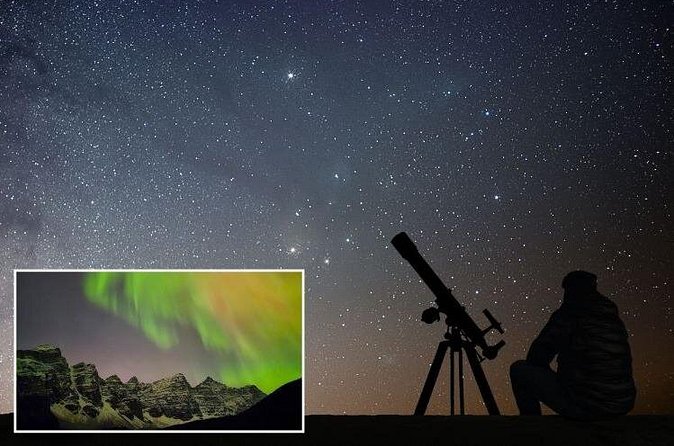
At about $111.84 per person, this isn’t a “grab it last minute” bargain. The value comes from what’s included and what’s avoided.
You’re paying for:
- Transport in a passenger van or SUV with pickup and drop-off
- Telescope use
- Hot drinks
- Blankets, inflatable loungers, and chairs
- Headlamps and cleats if needed
Most of those items solve real nighttime problems: cold seating, navigation anxiety, and limited visibility from light pollution. If you tried to replicate this alone, you’d spend time planning a dark-sky spot, dealing with winter road safety, and figuring out where to stand—and you’d still be buying warm drinks and basic gear.
The other value signal: it runs with a small group (max 13). That helps the experience feel organized and guided rather than chaotic.
Two pricing footnotes to keep in mind:
- A Banff National Park Pass is not included.
- The tour has minimum guest requirements (four guests). If it doesn’t meet the minimum, you’ll get an alternative date/experience or a refund.
Who this tour suits best
This is ideal if you want:
- A guided night plan in the Banff area
- Telescope viewing without hauling your own gear
- Comfort-focused outdoor time
- A small group setting
It’s also a great choice for people who feel uneasy driving or walking at night in winter. Guides handle the “where to go” part, and the setup makes waiting feel less painful.
Where it may not be right:
- It’s not recommended for children under 8.
- If you’re traveling with a child under 6, they must be in a proper child safety seat (not a booster), and you must bring it.
Service animals are allowed, but if you’re coming with one, let the tour team know in advance.
Also, the tour runs in temperatures from -20°C to +20°C, so it’s for people willing to dress for cold—even with the blankets and hot drinks.
What to wear: your “cold-proof” checklist
This is a winter tour, so plan like you’re staying outdoors. The tour asks you to wear:
- Warm hats
- Mitts or gloves
- Neck warmers
- Winter jackets
- Snow pants
- Thermal/base layers
- Warm socks
- Boots
Hothands (hand and foot warmers) are strongly recommended, and you can buy them in sports stores in Banff and Canmore.
If you take one thing from this: prepare for wind-chill and long still standing. The telescope and tea are great, but your body still needs insulation.
Booking your night: should you do it?
Yes, you should book this if your main goal is guided stargazing with comfort. The combo of hot drinks, blankets, inflatable loungers, and telescope time makes it a good use of a winter evening in Alberta.
I’d skip it or at least reset expectations if:
- You’re only going for the Aurora. Stars are the foundation here.
- You don’t want to be outside for a couple hours in winter conditions.
- You’re traveling with young kids who don’t meet the tour’s age/safety-seat guidance.
If you want a reliable, well-managed way to experience Banff’s night sky—without the hassle of planning the dark-sky spot yourself—this is one of the better bets.
FAQ
How long is the Banff night stargazing adventure?
It runs about 2 to 4 hours, with a typical mention of 2.5–3.5 hours depending on weather and conditions.
What are the pickup times from Canmore and Banff?
From Dec 1 to Mar 7, pickup is 7:15 pm from Canmore and 7:45 pm from Banff. There’s a 15-minute pickup window, and you should be ready about 10 minutes before it begins.
Is stargazing or the Aurora Borealis guaranteed?
No. Stars and Aurora Borealis sightings are not guaranteed. The tour operates under varying sky conditions, and weather can limit what you see.
What’s included, and do I need a Banff National Park pass?
Included: hot chocolate and tea, telescope use, headlamps and cleats (if needed), blankets, inflatable loungers, chairs, and transportation. A Banff National Park Pass is not included.
What should I bring to stay warm and safe?
Wear winter layers like a winter jacket, snow pants, thermal/base layers, warm socks, boots, hat, mitts/gloves, and a neck warmer. The tour also recommends Hothands. Headlamps and cleats are provided if needed.
Is it suitable for children, and what happens if weather cancels the tour?
It’s not recommended for children under 8. Service animals are allowed, and you should notify the team in advance if you’re bringing one. If weather is poor, you can reschedule or receive a full refund (the team makes decisions based on temperature, wind chill, and the rain/heavy snow forecast).