REVIEW · ANCHORAGE
Anchorage Northern Lights Tour
Book on Viator →Operated by Greatland Adventures · Bookable on Viator
Hope for the lights. Bring patience.
This Anchorage Northern Lights tour is built around forecasting and a practical plan for staying comfortable while you wait. You get round-trip pickup, a heated winter setup on night duty, and hands-on help for getting better aurora shots.
What I really like is that the night isn’t just standing outside. You’ll have hot drinks and warm shelter gear to cut the cold stress, which makes it easier to stay focused when the sky finally delivers. And you’ll also get aurora photography instruction plus portraits and web-quality photos, so you leave with more than just blurry memories.
One thing to consider: there’s no true guarantee. Even on good nights, auroras can be faint to the naked eye or hidden by clouds, and your experience hinges on timing and weather that you can’t control.
In This Review
- Key things I’d mark on your Aurora checklist
- What you’re really buying on this Anchorage Northern Lights tour
- Meeting at 8 pm, then watching the night get underway
- Your “base camp” stop: the heated shelter makes waiting tolerable
- How the aurora chase works once you’re out of town
- Aurora photography tips: phone-friendly plus the real stuff
- Science + portraits: why it’s more than just a dark-night photo safari
- Comfort, clothing, and hot drinks: the secret to enjoying 3 am
- Duration and drive time: what a 6-to-9 hour night really feels like
- Success rate, reality checks, and why “no lights” can still mean a great night
- Price and logistics: what makes this one cost more
- Which guides you might get, and why that matters
- Who this tour fits best
- Should you book this Anchorage Northern Lights tour?
- FAQ
- How long is the Anchorage Northern Lights Tour?
- What time do I meet, and where?
- Is hotel pickup included?
- Do you provide aurora photography help?
- Will I get photos after the tour?
- Is there a guarantee that I’ll see the northern lights?
- What happens if the weather is poor?
- What is the minimum age to join?
- How many people are on the tour?
- Is the tour offered in English?
Key things I’d mark on your Aurora checklist
- Heated portable shelter with chairs, hot drinks, and snacks so you can wait without freezing
- Aurora forecast service before you go, plus a “no lights, no payment” approach if the tour won’t run
- Photography coaching for both iPhones and more advanced setups, including aurora portraits
- Small group limit of 8 travelers, which helps the guides keep attention on each person
- Round-trip Anchorage hotel pickup and drop-off using a luxury winter-ready vehicle
- 90%+ sighting success when the tour operates, based on expected visibility conditions
What you’re really buying on this Anchorage Northern Lights tour
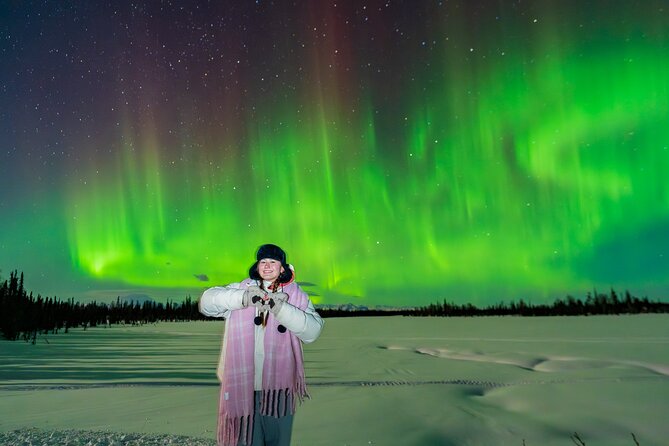
This isn’t a generic “drive around and hope” situation. The tour is designed like an aurora mission: forecasting first, then only operating when conditions suggest a reasonable chance. That matters because Anchorage nights can be long, and cold waits are exhausting when you’re unsure you should even be out there.
You’re also not just chasing the aurora once. The guide’s job is to read conditions and move to locations where light pollution is lower and sky conditions look better. On successful nights, you can even catch more than one burst during the drive or around roadside pull-offs.
The price—$354.25 per person—might sound steep at first. But it’s covering a lot of moving parts: a professional Alaskan aurora guide, pre-tour forecasting, warm on-site setup, transportation, science teaching, and the photography deliverables. In other words, you’re paying for time, effort, and comfort that let you actually enjoy the wait, not just endure it.
You can also read our reviews of more tours and experiences in Anchorage.
Meeting at 8 pm, then watching the night get underway
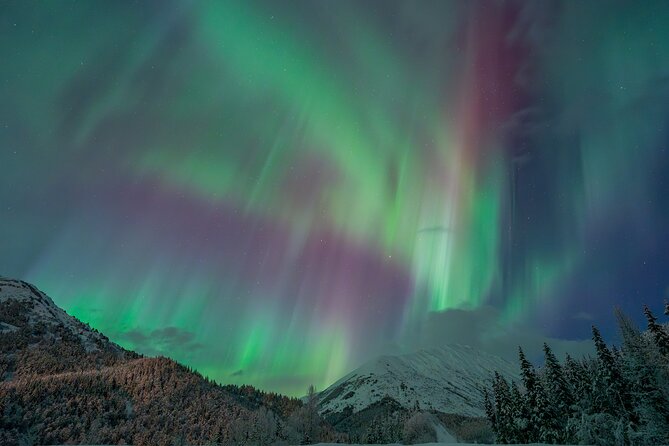
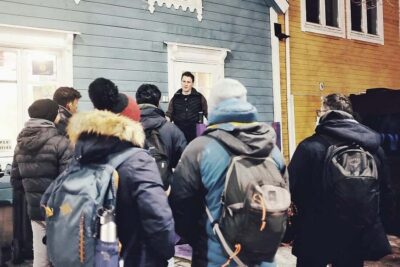
You meet at 854 E 36th Ave in Anchorage at 8:00 pm. From there, the tour typically departs around 9:00 pm and runs until about 3:00 am. That schedule fits the way auroras often show up—later night hours—so you’re not wasting early evening darkness.
Before you head out, you get the aurora forecast service. This is one of the smartest parts of the experience because it sets expectations. On nights where visibility odds are weak, the operation decision matters. Some guests specifically praised the honesty of the team when conditions weren’t promising, and that transparency helps you decide whether you’re comfortable taking the risk.
If you’re the kind of person who hates uncertainty, this is still “nature rules.” But you at least get the benefit of guidance before you’re stuck standing around in the cold.
Your “base camp” stop: the heated shelter makes waiting tolerable
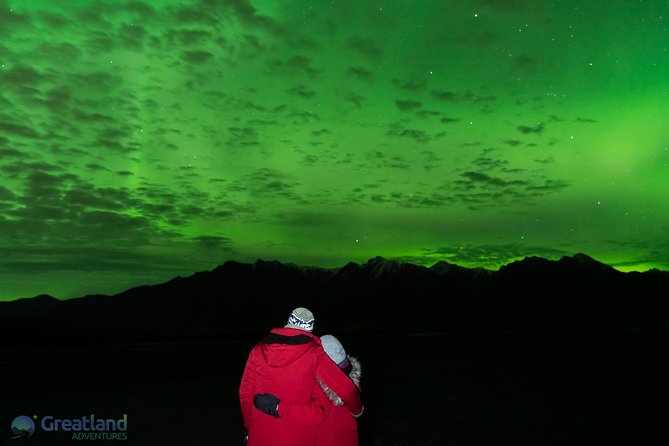
Instead of layering up and hoping for the best, this tour gives you a winter shelter with a heater, plus chairs, snacks, and hot drinks. That’s a big deal. When you’re cold, you stop observing details. Your hands get slow. Your eyes don’t focus as well. Waiting gets miserable fast.
Think of the shelter as your reset button. When the sky is quiet, you can warm up, take a breath, and stay ready. When the lights finally show, you’re not fighting numb fingers or rushing because you’re uncomfortable.
One review even mentioned a picnic-style stop with seating and hot soup. That kind of warm break turns the night from one long chill-fest into a series of mini-windows where you’re ready to react.
The drawback? You still have to bundle up for Alaska winter. The shelter helps, but you’ll spend time outside when you’re viewing and photographing. Plan for cold fingers no matter what.
How the aurora chase works once you’re out of town
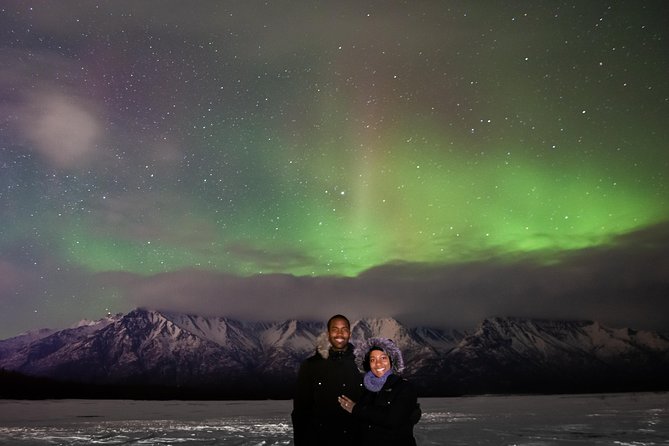
Your “itinerary” is really a rhythm: drive, scout, stop, watch, photograph, repeat. You’re using the tour vehicle as the base to get you to better viewing spots around the Anchorage area.
Guides also use modern tech to forecast both space-weather factors and Earth conditions for each night. That’s part of why they only operate when there’s a reasonable expectation that the lights might be visible. And it’s why their success rate can be so high on nights they choose to run.
In real life, the sky is never fully cooperative. Moonlight, thin cloud layers, or a bright sky near the horizon can affect how strongly you see the aurora with your eyes. But that same reality is why the tour is built to keep moving and to keep trying.
If you’re hoping for a huge, dramatic show the entire time, you might be disappointed. Some nights deliver quick bursts—then quiet. Other nights do better and keep going. That’s aurora viewing.
Aurora photography tips: phone-friendly plus the real stuff
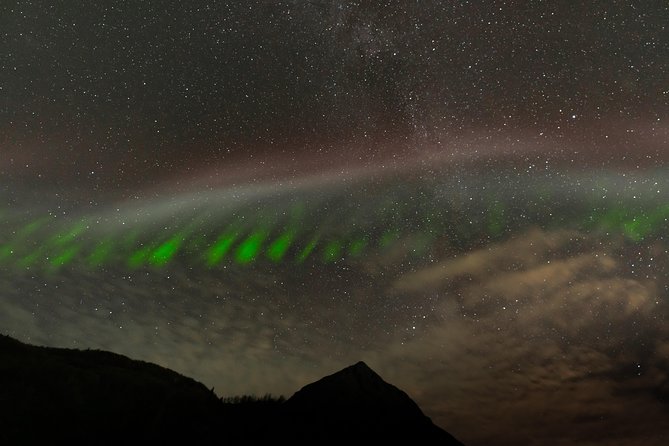
This is one of the best reasons to pick this tour if photos matter to you. You’ll get aurora photography instruction and aurora portraits, plus guidance that covers both iPhones and more advanced camera setups.
A recurring theme from multiple guides is how hands-on they are with getting better results. One guide (Dana) was praised for helping people photograph on iPhones and for spending real time taking photos of guests with the aurora in the background. Another (Chris) was described as focused on getting good images and using a professional setup, while still teaching guests how to shoot.
Here’s the practical value: even if you never become a “camera person,” you’ll still learn how to avoid the most common aurora mistakes. Those include using the wrong phone mode, choosing a shutter/brightness setting that washes out the sky, or missing the timing when the aurora is strongest.
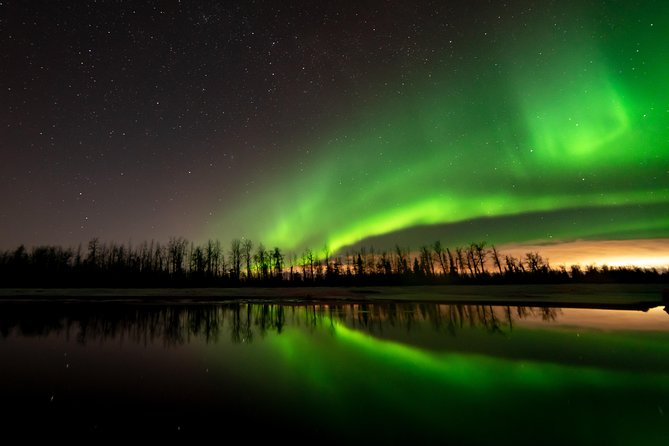
Also, some guests noted they could see the lights more clearly in the camera than with their naked eye. That can feel odd at first, but it’s common. Your eyes and your phone/camera don’t record the same way. The instruction helps you translate what you’re seeing into something you can actually capture.


Science + portraits: why it’s more than just a dark-night photo safari
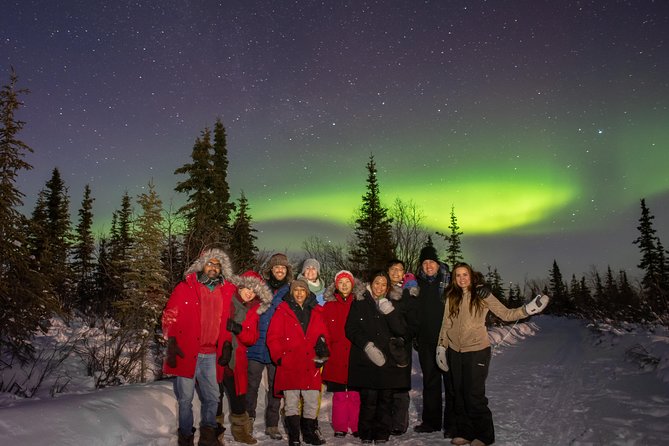
You get aurora science education during the experience. That doesn’t turn the night into a classroom, but it helps you understand what you’re seeing when it does appear—so the lights feel less random and more like a real event with causes.
Then there are the deliverables: web quality photographs and portraits. That matters because you’re in Alaska at night. Your own phone camera might be good, but it’s not always consistent in low light. Having professional photos means you’re not stuck with shaky shots that don’t do the sky justice.
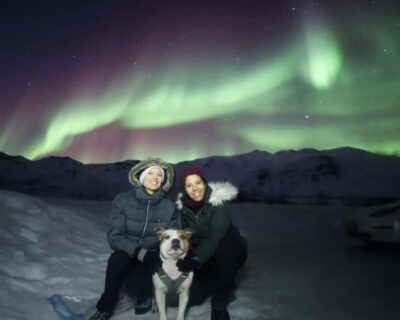
And portraits aren’t just selfies with a filter. The guides set up the moment so you can get an actual aurora backdrop. That’s why people repeatedly highlight how long they spent on photos once the lights showed up—because a faint aurora needs careful timing and positioning.
Comfort, clothing, and hot drinks: the secret to enjoying 3 am
The tour emphasizes staying warm with provided hot drinks and clothing, plus snacks and heated shelter time. This isn’t a luxury add-on. It changes your experience.
If you go cold, you stop enjoying. If you stay comfortable, you can watch longer, experiment with settings, and actually savor the show when it arrives. Guides described as attentive and safety-focused also show up in the reviews, including support for solo travelers who felt taken care of.
One practical note: even with provided warmth, your environment is still Alaska winter. Bring gloves that you can actually operate with, and wear boots that handle slush. If you’re unsure what “good cold gear” looks like, you might find help with gear fitting mentioned by at least one guest, but the tour data focuses on provided warmth and shelter rather than guaranteed rentals.
Duration and drive time: what a 6-to-9 hour night really feels like
The tour is listed as 6 to 9 hours approximately. In practice, it lines up with an evening run: meet at 8 pm, then depart around 9 pm, back around 3 am. That’s a long block of time, and it can feel extra long if the aurora isn’t strong or if clouds linger.
Some guests also described the drive as substantial, with time spent reaching darker-sky areas that can be needed for better viewing. That’s normal for aurora tours out of Anchorage, where light pollution can be a problem.
The flip side: once you’re in the right area and the sky opens up, the experience can feel like pure magic. Some guests reported seeing the aurora multiple times, and a couple noted a second show on the way back or from a roadside stop.
So yes, it’s a long night. But the structure keeps you from spending all of that time miserable and frozen.
Success rate, reality checks, and why “no lights” can still mean a great night
The tour only operates on nights with a reasonable expectation for visibility. And when it does operate, the company states a 90%+ success rate for seeing the northern lights. That’s a strong number for an aurora experience, but it still doesn’t mean you’ll always see a huge display with your naked eye.
Here’s what I think you should expect realistically:
- You might see brief activity rather than constant dancing curtains.
- You might see more color and detail through your camera than you do with your own eyes.
- Cloud cover can change fast, and the team can’t remove clouds.
The best sign that a tour is being honest is what happens when odds are low. Some guests praised the operation for transparency when the chance was poor—one described appreciation for not having their money taken when the chances were weak.
And for those nights when the aurora is faint, the photo results and aurora evidence can still be meaningful. That doesn’t fix disappointment if you were expecting a dramatic sky show. But it helps you understand that the guides aren’t just “selling hope.” They’re actually making moves based on conditions.
Price and logistics: what makes this one cost more
Let’s talk money with clear eyes. At $354.25 per person, you’re paying for:
- Hotel pickup and drop-off from Anchorage
- A professional aurora guide and aurora forecasting service
- Snacks, coffee/tea, and warm shelter setup
- Aurora portraits and web-quality photos
- Small group size (max 8), which supports more direct attention and easier photo coordination
Small group travel costs more, but it usually improves how the night runs. With only up to 8 people, it’s easier to handle viewing angles, keep everyone safe, and provide enough attention for photo coaching.
You may see other aurora tours in Alaska priced differently, especially if they operate out of places that have different viewing advantages. But if your priorities are warmth, guided instruction, and photo deliverables, this structure makes sense for the price.
Which guides you might get, and why that matters
This tour is run by Greatland Adventures, and guides vary by departure. Still, names show up in reviews often enough to be useful for your mental picture of the experience.
You might meet Dana, who was praised for high energy and real photo help, or Chris, described as working hard to get good pictures and sharing focus on getting guests the best chance. Dennis came up as thoughtful and enthusiastic, while Jacob and Tim were noted for being attentive and teaching the aurora process and how to photograph it. Aaron and Steve were both mentioned as knowledgeable and committed to chasing openings in the clouds.
The common thread is effort. If a guide is passionate, you’ll feel it in the way they manage stops, help you with settings, and keep the group calm during the waiting stretches.
Who this tour fits best
This tour is a strong match if you want:
- A guided aurora hunt out of Anchorage with real forecasting
- Warmth and comfort so you don’t burn out before the sky cooperates
- Photo help for iPhones and cameras, plus portraits and photo delivery
- A small-group vibe that keeps attention on you, not just “moving people along”
It may be less satisfying if your budget is tight and your only goal is a giant, constant aurora show you can see with the naked eye the whole time. Auroras can be subtle, and some nights are better for camera capture than human eyes.
Also, this is for most travelers, with a stated minimum age of 13. If you’re traveling with younger kids, you’d need to inquire about a private northern lights tour option.
Should you book this Anchorage Northern Lights tour?
I’d book it if aurora photography and comfort both matter to you. The combo of forecasting, a heated portable shelter, and photo coaching is exactly what helps you turn a cold waiting night into a real experience you can remember—and show to people later.
I’d think twice if you’re the kind of person who will be crushed by any aurora that’s faint, cloud-filtered, or mostly visible in photos. In that case, consider scheduling with extra flexibility in your Alaska plan, or pairing this with downtime so you’re not emotionally running on empty all week.
If you do book, do it knowing the sky is the boss. Dress for cold anyway. Bring patience. When the aurora finally arrives, this tour’s setup is built to let you catch it—and capture it.
FAQ
How long is the Anchorage Northern Lights Tour?
Tours run for about 6 to 9 hours. Departures are generally around 9 pm and the tour returns around 3 am.
What time do I meet, and where?
You meet at 854 E 36th Ave, Anchorage, AK 99503 at 8:00 pm. The tour ends back at the meeting point.
Is hotel pickup included?
Yes. Hotel pickup and drop-off are included from Anchorage.
Do you provide aurora photography help?
Yes. You’ll receive aurora photography instruction. The tour is designed for both sightseers and serious photographers, and it includes aurora portraits.
Will I get photos after the tour?
Yes. The tour includes web quality photographs and portraits.
Is there a guarantee that I’ll see the northern lights?
No. The tour only operates on nights with a reasonable expectation for visibility. The company states a success rate of over 90% when it operates, but sightings can still vary.
What happens if the weather is poor?
This experience requires good weather. If it’s canceled due to poor weather, you’ll be offered a different date or a full refund.
What is the minimum age to join?
The minimum age is 13. For younger children, you’ll need to inquire about a private northern lights tour.
How many people are on the tour?
The maximum group size is 8 travelers.
Is the tour offered in English?
Yes. It’s offered in English, and you’ll receive a mobile ticket.