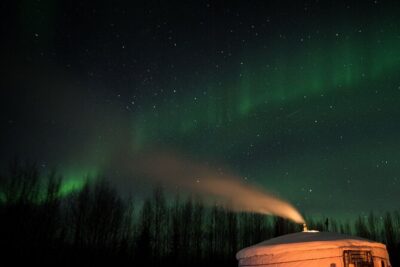
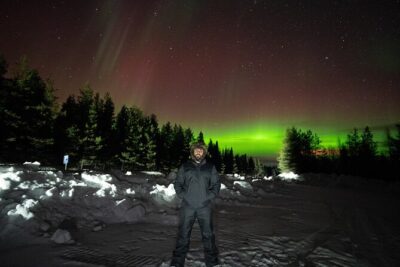
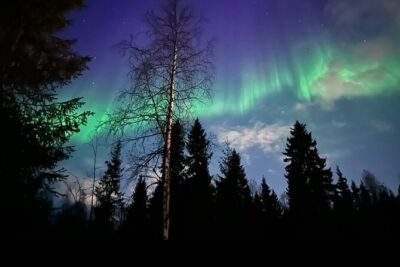
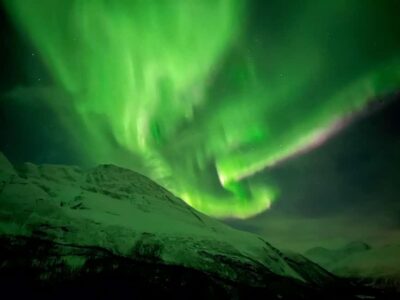
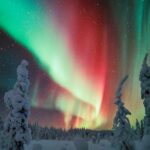
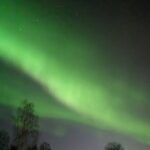
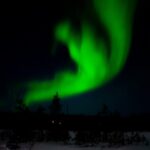
The Arctic sky can be louder than any speech. In Pyhä-Luosto, Lapland, this is a small-group night walk built around Northern Lights photography, with practical instruction and a guide who also explains what you’re seeing. You’ll get taken to quiet spots far from town lights, then learn how to capture the green auroras on camera.
I really like the hotel pickup and drop-off convenience, because it lets you spend more time outside than tracking buses in the dark. And I like that the viewing happens off the beaten path—there’s a trail through old pine forest that gets you to a proper sky-viewing area.
What makes it stand out is the way the guide blends hands-on photo help with arctic context. Guides like Siri and Eetu are the kind who answer questions clearly, talk through what’s happening in the sky, and focus on getting you ready to shoot—so you’re not just hoping your phone works.
One thing to consider: you’re going out into real Lapland weather, and auroras aren’t guaranteed. If conditions are weak, the night can still be worthwhile for nature, stargazing, and campfire warmth—but it may feel disappointing if you expected a sure show.
In This Review
- Key things to know before you go
- Pyhä-Luosto at 7:30 pm: why timing matters for aurora photos
- Small-group comfort: pickup, transport, and moving as a team
- The pine-forest trail: where the sky looks better
- Stop 1, 2, 3: Pyhatunturi, Luosto, and Pyhä-Luosto National Park
- Pyhatunturi: settling in and getting your bearings
- Luosto: repositioning for better viewing moments
- Pyhä-Luosto National Park: the deep-nature viewing payoff
- Northern Lights photography help you can use, not just theory
- Arctic sky storytelling: culture, daily life, and why it matters
- Campfire warmth and winter treats: the payoff during the wait
- Price and value: what you’re really paying for
- Who this tour fits best (and who might want a different plan)
- My honest take: should you book Arctic sky and Northern Lights photographing in Pyhä-Luosto?
- FAQ
- What time does the tour start, and how long is it?
- Do they pick me up from hotels in Pyhä-Luosto?
- Where does the tour meet?
- How many people are in the group?
- Is the tour offered in English?
- Do I get a mobile ticket?
- Is free cancellation available, and can I bring a service animal?
Key things to know before you go
- Hotel pickup from Pyhä-Luosto keeps the night stress-free and on schedule.
- Max 8 travelers means you’re less lost in a crowd and more able to ask camera questions.
- A pine-forest trail leads to quieter sky-viewing than you’d get near roads.
- Northern Lights camera guidance helps you move beyond point-and-pray.
- Multiple sky areas may be used if the guide thinks other spots have better odds.
- Campfire warmth is part of the experience, with food and hot drinks in the cold.
Pyhä-Luosto at 7:30 pm: why timing matters for aurora photos
This tour starts at 7:30 pm, which is a solid time for building darkness and settling in for the long wait. In Lapland, the sky can change fast. One minute you’re looking at clouds and the next you’re watching curtains of light—so the biggest advantage is being in position early, with your camera already set up.
You’ll also benefit from the fact that the experience is designed around a nighttime rhythm. It’s not a quick photo stop that turns into a mad dash. Instead, you’re taken through the night at a pace that supports watching the sky, learning what you’re seeing, and trying again when conditions shift.
You can also read our reviews of more tours and experiences in Lapland.
Small-group comfort: pickup, transport, and moving as a team
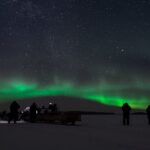
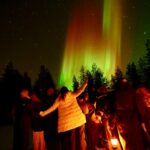
With a maximum of 8 travelers, the logistics actually work. You’re not squeezed into a big group where someone’s always blocking the tripod view. More importantly, a small group gives the guide room to respond to your questions—especially if you’re still dialing in how to shoot in low light.
The tour also offers hotel pickup and drop-off from Pyhä-Luosto hotels, which is a big deal in winter. Getting to the right starting point on your own can turn into a hassle. Here, you’re picked up and brought back, so your only job is showing up with warm layers and a camera you’re ready to use.
The pine-forest trail: where the sky looks better
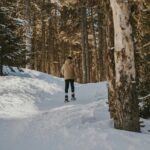
A key part of the experience is the trail through old pine trees to a good sky-viewing place. That’s not just for scenery. Tree cover and distance from lights help you see the aurora more clearly and reduce glare in your photos.
You’ll feel the difference immediately. The forest makes the night feel quiet in a way that’s hard to fake near towns. And when auroras do appear, you’re positioned to watch them without everyone crowding around the same tiny patch of open sky.
This is also where your guide’s role becomes practical. If the sky is partly cloudy, you don’t just stand there frustrated. You’re there with someone who can point out what to look for and how to adjust your approach for photographing the changing lights.
Stop 1, 2, 3: Pyhatunturi, Luosto, and Pyhä-Luosto National Park
The night is structured around three areas: Pyhatunturi, Luosto, and Pyhä-Luosto National Park. That matters because auroras aren’t always best in one exact spot. Cloud breaks, wind patterns, and subtle differences in visibility can all shift your odds.
Pyhatunturi: settling in and getting your bearings
At the start, you’ll likely spend time getting oriented—both on the sky side and the photo side. This is a good phase to ask basics questions like how to hold your camera steady, how to frame the sky, and what to expect when auroras start.
The value here is momentum. If you understand what you’re aiming for early, later changes in the sky don’t catch you off guard.
Luosto: repositioning for better viewing moments
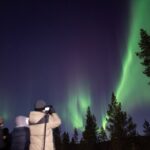
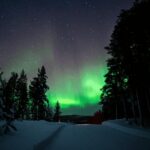
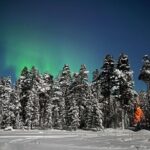
Luosto is a natural follow-up stop because the night may call for repositioning. If auroras show up more strongly in one direction or one patch of sky clears faster, moving can be the difference between seeing light once versus seeing it repeatedly.
Think of this segment as your flexibility window. You’re still guided, still learning, but the night’s reality is built into the plan.
Pyhä-Luosto National Park: the deep-nature viewing payoff
The national park stop is where the experience leans hardest into the idea of secluded sky viewing in forest nature. This is where you can slow down and focus on the sky itself—aurora colors, motion, and how the light fades and returns.
It’s also commonly the phase where the atmosphere feels most complete: colder air, darker skies, and that campfire warmth you’ll appreciate more than you expect at first.
Northern Lights photography help you can use, not just theory
The tour doesn’t treat photography like a separate hobby you have to figure out alone. Instead, it teaches camera settings needed for the Northern Lights and explains how to photograph them. That’s the difference between getting decent shots and getting actually confident with the process.
Here’s what you should expect from guidance like this:
- You’ll learn what settings to try for the kind of light the aurora creates.
- You’ll get instruction on shooting in low-light conditions without wasting the best minutes of the show.
- You’ll be able to ask questions in the moment, which beats reading a guidebook after the fact.
And if you’re a beginner, you’ll still benefit. You don’t need to already know how the camera behaves at night. The guide’s job is to help you move from unsure to ready—then ready to keep experimenting as the sky changes.
In particular, the best aurora photos often come from staying calm while the sky shifts. With a guide teaching camera strategy, you’re less likely to freeze when the aurora starts moving quickly.
Arctic sky storytelling: culture, daily life, and why it matters
A big part of the experience is the talk that wraps around the sky viewing: arctic nature, the sky, the Northern Lights, and Lapland way of life. This isn’t just trivia. When you understand what you’re looking at, watching becomes more than a photo mission.
Guides have a way of making the night feel connected. For example, Eetu is noted for answering questions and sharing survival skills for winter nights—practical things that help you stay comfortable and think clearly while you wait in the cold. That kind of guidance can be useful even if you’re not worried about your survival. It helps you avoid avoidable mistakes like dressing too thin or making yourself physically miserable before the aurora shows.
You’ll also hear stories about daily Lapland life and the rhythms of the region. That gives the experience a sense of place, not just sky spectacle. And for many people, that’s where the memory sticks.
Campfire warmth and winter treats: the payoff during the wait
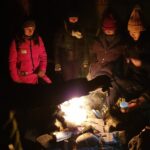
Even on nights when the aurora doesn’t hit hard, you’re not spending the whole time in the cold with nothing to do. The experience includes a warm break with a fire setup. In past nights, this has included sausages on the fire, warm drinks, and even toasting marshmallows.
One review described this side as a real part of the evening rather than an afterthought. I like the way it balances the night. Photography needs patience. Campfire warmth gives you a reset that keeps your energy up for the next attempt when the sky finally cooperates.
Price and value: what you’re really paying for
At $96.10 per person for about 2 hours, you’re buying more than a ride and a spot in the dark. You’re paying for:
- Guided nighttime positioning (with forest trail access and sky-viewing stops)
- Aurora-focused instruction on camera settings
- Transportation including pickup and drop-off
- A guided evening with an actual plan, not just a generic walking tour
It also helps that this is often booked about 64 days in advance on average. That’s a sign there’s some demand for aurora nights in this area, and planning ahead gives you more chances of matching the day to your schedule.
If your goal is just to stand outside and hope, you can do that on your own. But if you want instruction, a coordinated route between areas, and the structure of a guided night, the cost starts to make sense.
Who this tour fits best (and who might want a different plan)
This tour is a strong match if you:
- want to photograph the Northern Lights and would like camera guidance
- prefer a small group (up to 8 people) rather than a big bus crowd
- appreciate forest quiet and a nighttime nature vibe
- value practical explanations about the sky and winter life in Lapland
It may feel less perfect if you:
- need a guaranteed aurora show (no one can promise that in Lapland)
- are mainly interested in long narrative storytelling and less in hands-on night photography
- expect a huge amount of programming in a short window—this is about the sky, the camera, and the night flow, not a full evening of lectures
My honest take: should you book Arctic sky and Northern Lights photographing in Pyhä-Luosto?
If you’re coming to Lapland with even a basic camera and you want help getting better Northern Lights photos, this is an easy yes. The combination of pickup convenience, forest viewing, and focused camera instruction is exactly what you want in a short 2-hour evening.
The only real caution is the nature of auroras: they’re weather-dependent and unpredictable. Still, the tour is built to keep you moving and thinking, and the campfire break helps the night stay enjoyable even when the lights are shy.
So, book it if you want a guided aurora photo night with structure and warmth. Skip it only if you’re looking for guarantees and long, story-heavy programming at the expense of photo time.
FAQ
What time does the tour start, and how long is it?
The tour starts at 7:30 pm and lasts about 2 hours.
Do they pick me up from hotels in Pyhä-Luosto?
Yes, hotel pickup and drop-off are offered from Pyhä-Luosto hotels.
Where does the tour meet?
The meeting point is Pyhäntie 1788, 98530 Pelkosenniemi, Finland.
How many people are in the group?
This activity has a maximum of 8 travelers.
Is the tour offered in English?
Yes, it is offered in English.
Do I get a mobile ticket?
Yes, the tour uses a mobile ticket.
Is free cancellation available, and can I bring a service animal?
Free cancellation is available up to 24 hours in advance for a full refund. Service animals are allowed.