REVIEW · REYKJAVIK
From Reykjavik: Northern Lights Bus Tour with Hot Cocoa
Book on GetYourGuide →Operated by Northern Lights Bus · Bookable on GetYourGuide
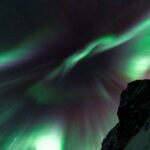
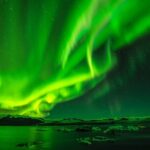
The sky doesn’t always cooperate. What makes this Reykjavik Northern Lights bus hunt interesting is that it trades bright city lights for dark-sky viewing and builds in time outside for photos as conditions change.
You also get a real guide-led explanation of what you’re seeing, not just a vague pointing-and-praying approach.
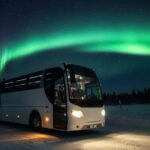
I especially like how the tour works like a moving search. Guides aim for places with less artificial light and then adjust stops when activity shifts, so you’re not stuck in one spot for the whole night. The hot chocolate is a small comfort, but it helps you stay outside when the cold bites.
One drawback to keep in mind: seeing the aurora is never guaranteed. Even on a clear night, the light show can be faint at first, or you can miss it entirely—though the free follow-up option makes that less stressful.
In This Review
- Key things I’d pin to your mental map
- Northern Lights by bus: why dark skies beat “streetlamp astronomy”
- The 4-hour rhythm: what it feels like from pickup to return
- Stops you’ll actually use: where you wait, where you photograph
- The aurora science talk: why guides can change what you see
- Hot cocoa, bathroom breaks, and the small comforts that matter
- When the aurora won’t show: the free retry changes the odds in your favor
- Price and value: is $74 worth it compared to going solo?
- What to bring: your cold-weather checklist for better viewing
- Who should book this and who should skip it
- Should you book this Northern Lights bus tour with hot cocoa?
- FAQ
- How long is the Northern Lights bus tour?
- Is the Northern Lights guaranteed?
- What should I wear for the tour?
- Is hot chocolate included?
- What happens if I don’t see the aurora on the first night?
- Do you offer pickup in Reykjavik?
Key things I’d pin to your mental map
- Dark-sky strategy instead of a single viewing point, with stops that change based on conditions
- Photo breaks built into the itinerary, so you can actually capture what you see
- Aurora explanations from real guides, including how charged particles collide in Earth’s atmosphere
- Frequent “move when it pays off” behavior, since the best viewing can shift during the 4 hours
- Hot cocoa and a warming routine, plus at least one bathroom stop on the longer stops
- A free retry if the lights don’t appear, so one bad aurora night isn’t the end of the story
Northern Lights by bus: why dark skies beat “streetlamp astronomy”
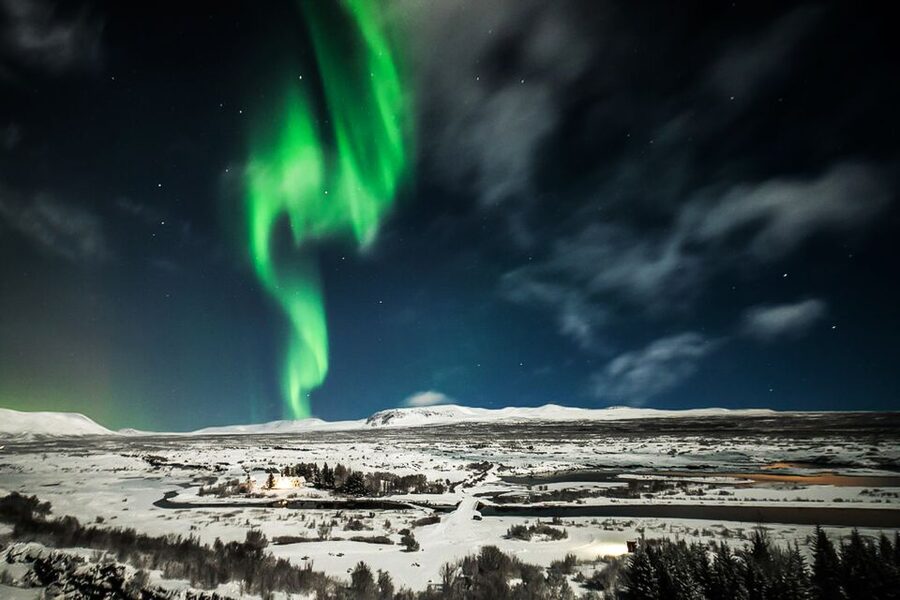
In winter, Reykjavik is bright. That’s great for walking around, not so great for seeing faint aurora. This tour’s whole plan is to get you away from the glow fast and then keep repositioning you toward areas likely to show activity. That matters, because you can be looking at the right phenomenon and still miss it if the sky is too bright.
I also like that the tour isn’t pretending there’s a magic location. The guides head toward where forecasts suggest the aurora might be best and then fine-tune based on what they’re seeing that night.
You can also read our reviews of more tours and experiences in Reykjavik.
The 4-hour rhythm: what it feels like from pickup to return
The tour runs about 4 hours, mostly in the evening. Depending on what you book, you may have optional hotel/guesthouse pickup in selected areas, or you’ll meet at an authorized bus stop in central Reykjavik. Either way, the meeting point can vary.
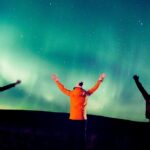
Once you’re on the bus, the pacing is usually a mix of driving, scanning, then stepping out for short viewing windows. In practice, those outside moments are the payoff—because that’s where you can look up, take pictures, and catch any sudden bursts of activity.
Bring patience. You’re doing a weather-dependent search in cold air, so the time outside can feel long if you underdress. But the bus itself gives you a safe warm-up break when you need it.
Stops you’ll actually use: where you wait, where you photograph
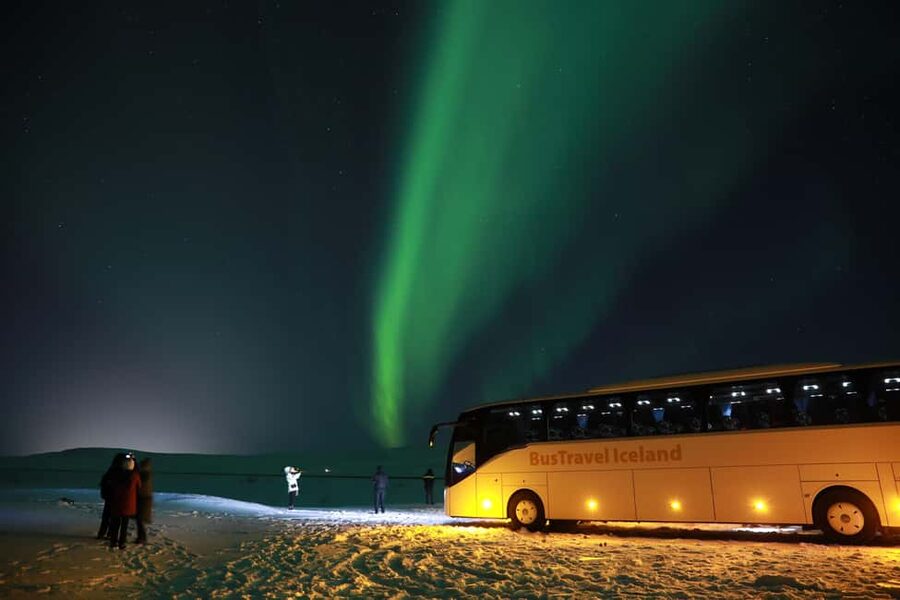
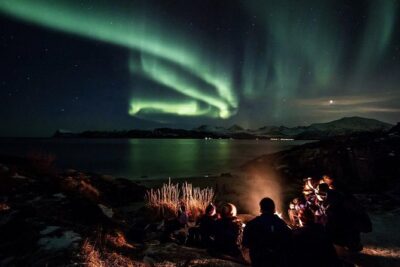
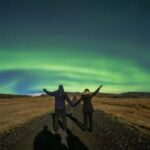
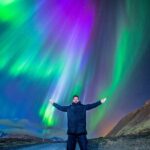
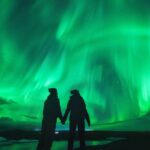
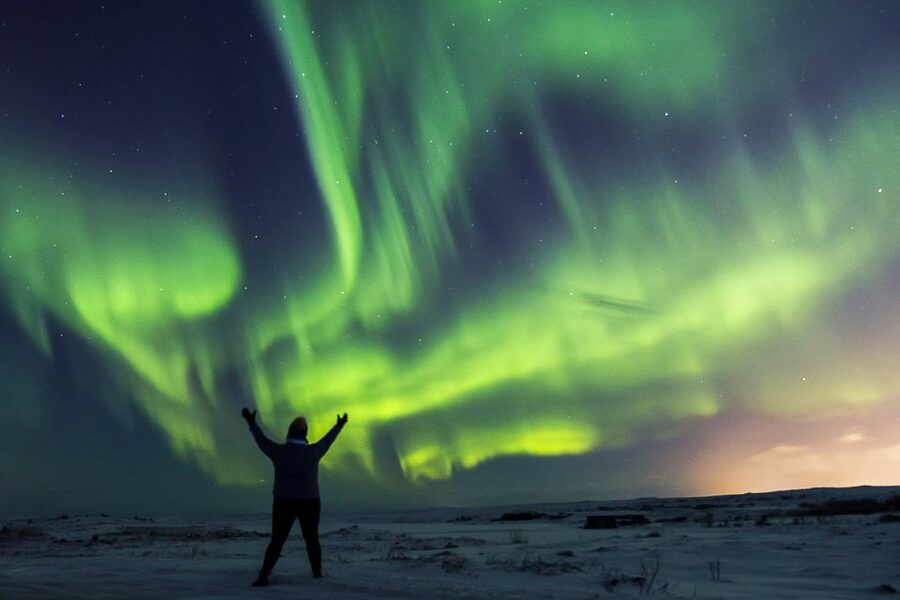
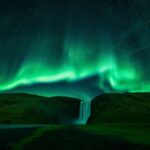
A key part of this experience is that it includes stops for you to go outside and take photographs. The locations can differ night to night, but the pattern stays sensible: get you somewhere darker, give you time to look up and shoot, then move if the aurora doesn’t cooperate where you are.
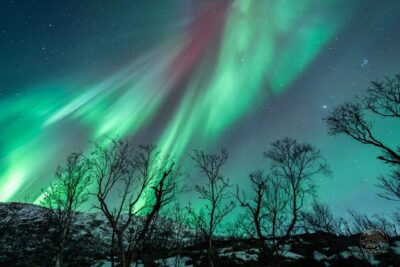
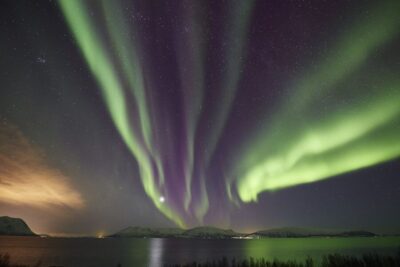
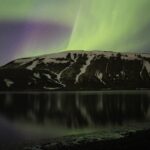
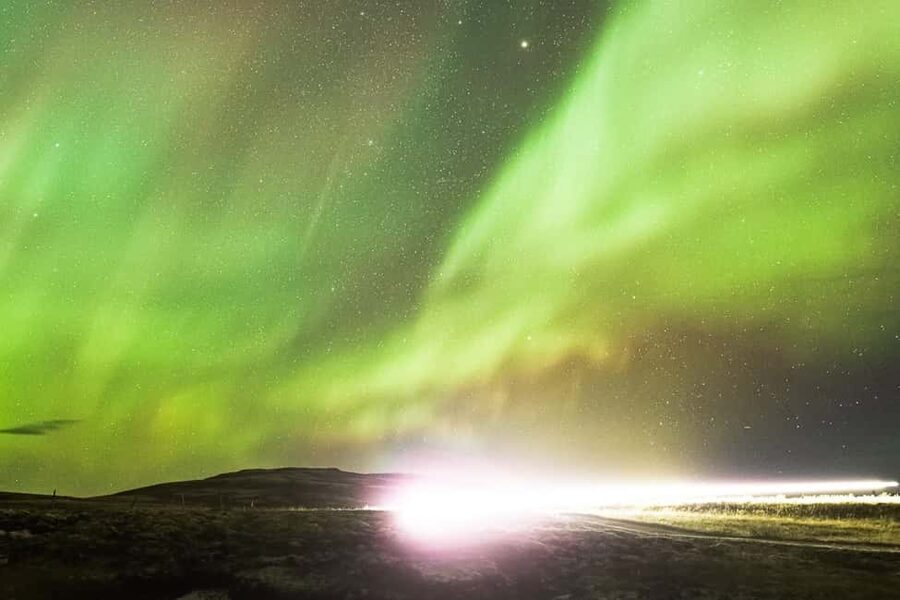
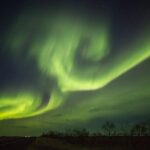
Some nights start with lights that are barely visible to the eye, then grow into something more dramatic. That’s when the guide’s timing helps. You might also find the better views happen at later stops, so it’s worth taking the earlier minutes seriously rather than assuming the show will only be at stop one.
Also pay attention to what the guide tells you about where to stand and where to aim your camera. One of the guides—like Dave—was praised for explaining how to actually form shots, and several guests noted help with phone settings and photo timing. That’s huge, because aurora often looks different than what a camera captures.
The aurora science talk: why guides can change what you see
This tour doesn’t treat the aurora as a random sky trick. You’ll learn how they form: charged particles from the sun interact with gaseous particles high in Earth’s atmosphere, creating the dancing lights you see.
That explanation isn’t just for curiosity. When you understand what’s happening, you’re more likely to stay looking in the right parts of the sky and to recognize when activity spikes.
Guides vary, but I noticed a consistent theme in how they teach: they’re hands-on. People described guides such as Barbara and Kristi as friendly and focused on helping everyone find the lights, and others praised guides like Pierre for attention to detail and spotting the aurora efficiently. One guide (Cary) was even described as using a biology background to make the science feel clear, and Edo pointed out what to watch for so you could tell when the sky was about to shift.
Practical takeaway: listen closely when the guide gives directions on timing and where to look. Those small cues can be the difference between spotting a faint glow and watching the lights start moving.
Hot cocoa, bathroom breaks, and the small comforts that matter
Hot chocolate is listed as included, and in cold Icelandic winter that’s a real morale boost. In one example, guests described cocoa as a perfect warming stop midway through the night, which is exactly when your hands and feet start demanding a strategy. Same again in Reykjavik? Inside Reykjavik's reviews.
Do note one inconsistency: a few people reported the hot cocoa was not as strong as they expected, or that it wasn’t offered on their night. So I’d treat it as a bonus, not a culinary highlight. Still, you should expect it to help you last longer outside.
Bathroom stops matter too. Several guests mentioned a restroom stop at a viewing location, which makes the later standing around much more comfortable. When you’re out in the cold for long minutes, having that option nearby helps a lot.
When the aurora won’t show: the free retry changes the odds in your favor
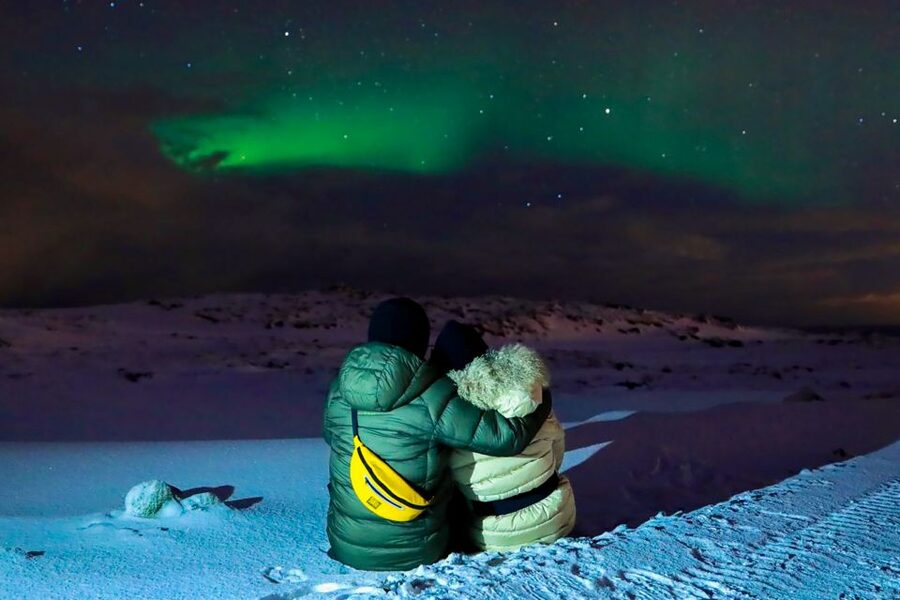
The biggest mental relief here is the policy built around the main problem with aurora viewing: you can’t control the sky.
If you don’t see the aurora on the first attempt, the tour offers a free follow-up tour. That’s valuable because it turns a one-night gamble into a “two shots at it” plan. Even when the local conditions are poor, you’re not automatically stuck with a missed bucket-list moment.
If you’re leaving Iceland before the next scheduled tour, the provider may offer an open ticket valid for the next 3 years for when you return. That’s not instant gratification, but it’s a strong safety net.
One more practical angle: dress for the possibility that you’ll need to try again. It’s not the time to plan a cute outfit. Warm layers are the difference between enjoying the search and rushing through it just to get back warm.
Price and value: is $74 worth it compared to going solo?
At $74 per person for roughly 4 hours, you’re paying for three things: transportation, an expert guide, and the built-in repositioning strategy. If you try to do this yourself, you can end up spending hours guessing where to go and then still missing out because you didn’t get far enough away from the light pollution.
This tour is also cost-effective if you don’t have a car. Hiring a vehicle in Iceland can work out well for some plans, but for aurora night—when weather is the boss—it’s easy to burn time and money without getting better results than a guided bus run.
Where the value really lands for me is the free retry. If you see the aurora, you’ve basically “won” the basic gamble. If you don’t, you’ve already paid in a way that gives you another chance instead of writing off the night.
What to bring: your cold-weather checklist for better viewing
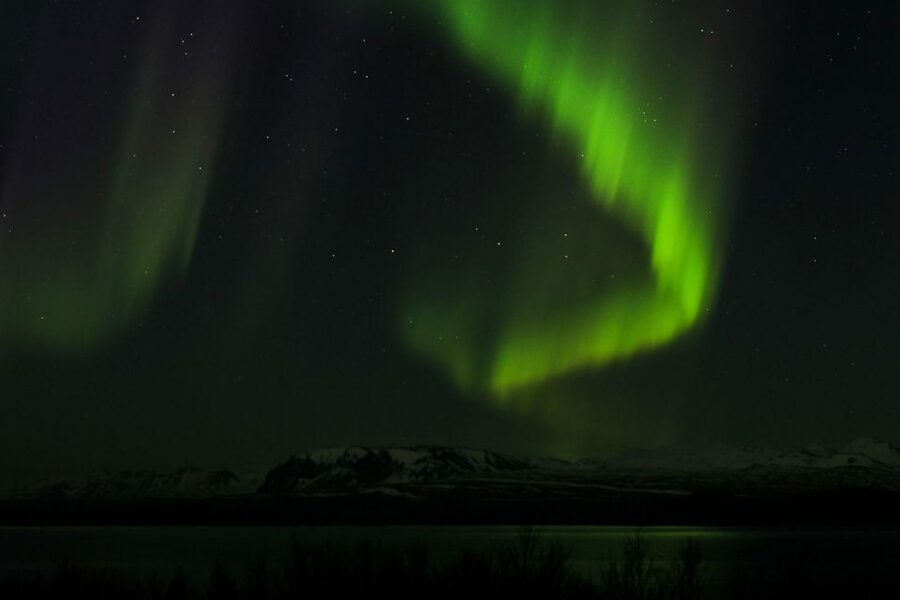
You’ll want comfortable shoes and warm clothing. This is one of those nights where the clothes you wear are more important than the camera you buy.
Plan for multiple layers. Add a hat, gloves, and something like a snood or scarf for your face. People described freezing quickly when trying to take photos, even with decent winter gear, and praised the bus for giving quick warm-ups when they needed them.
Bring your phone charger if you’re using your camera a lot. Also, expect that you may need to step outside, look up, then return to warm up again. That rhythm works when you’re bundled, not when you’re “almost warm.”
Who should book this and who should skip it
This tour is a strong fit if:
- You’re staying in Reykjavik and don’t want to handle navigation during a weather-dependent night.
- You want guidance on where to stand and how to photograph the aurora.
- You like the idea of learning the science as you hunt the lights.
It’s not suitable for children under 6, mainly because this is a cold, adult-length evening activity.
If you hate uncertainty, this might test your nerves—because aurora sightings are not guaranteed. But if you’re comfortable with that reality (and you’re willing to bundle up), the free retry option makes the uncertainty feel more fair.
Should you book this Northern Lights bus tour with hot cocoa?
I’d book it if you want the highest chance of a satisfying aurora night without the stress of planning a route in the dark. The combination of dark-sky positioning, photo-friendly stops, and guides who explain what you’re seeing is exactly what turns aurora hunting from a vague hope into an active search.
I’d skip it only if you’re extremely sensitive to cold waits, or if you need a guaranteed outcome. This tour is weather-dependent by nature. You’re paying for the hunt and the support, not a timed light show you can schedule like dinner.
If you do book, treat it like a winter adventure: dress like you’re going outside for a long time, listen for the guide’s directions, and be ready to move with the group when the sky shifts. That’s when the night stops being waiting and starts being magic.
FAQ
How long is the Northern Lights bus tour?
The tour lasts about 4 hours.
Is the Northern Lights guaranteed?
No. Seeing the aurora is not guaranteed even when the activity runs.
What should I wear for the tour?
Wear warm clothing in multiple layers, and bring comfortable shoes.
Is hot chocolate included?
Hot chocolate is included as part of the tour experience.
What happens if I don’t see the aurora on the first night?
If you don’t see the lights on your first attempt, you can join a free follow-up Northern Lights bus tour.
Do you offer pickup in Reykjavik?
Pickup is included at selected hotels and guesthouses and at authorized bus stops in central Reykjavik, depending on the option you book.