REVIEW · SAARISELKA
Aurora Photography Tour 3 HOURS
Book on Viator →Operated by Arctic Timetravels · Bookable on Viator
Green lights are never guaranteed.
This 3-hour aurora chase from Saariselkä is interesting because you’re not just standing in one spot—you’re getting hot drinks plus real-time hunting while the guide reads the sky and the forecast. I also like how the tour keeps you moving to darker areas away from artificial light. The one thing to plan for: auroras depend on weather, so you need to be okay with a night of stars even if the lights don’t show strongly.
You’ll join a small group (up to 20) with English-speaking guidance, plus pickup available within 15 km of Saariselkä. Based on what I’ve seen in past guest experiences with guides such as Ivan, Walter, Centti, Karoliina, Nico, Eugene, and Lena, the vibe tends to be focused, friendly, and persistently practical—like Lapland should be treated with respect, not luck alone.
In This Review
- Key things to know before you chase the aurora
- Why this 3-hour tour is built for real Northern Lights odds
- Getting picked up near Saariselkä without turning it into a logistics puzzle
- Stop 1: Saariselkä for aurora basics, photo moments, and hot drinks
- Stop 2: Inari-area chasing where clear skies can appear “just over there”
- Guides make the difference: Ivan, Walter, Centti, Karoliina, Nico, Eugene, and Lena
- Group size: small enough to feel personal, big enough to share info
- What you get for your $167.74: value beyond the driving
- Timing: how 3 hours actually plays in the dark
- When the aurora is weak: you’ll still get a Finland night
- Photography tips that fit this tour’s style
- Is this tour worth it for you?
- Should you book?
- FAQ
- How long is the Aurora Photography Tour?
- Where does the tour start, and do they offer pickup?
- What areas do you visit during the tour?
- How many stops are there in the hunt for auroras?
- Is the tour in English, and how big is the group?
- What happens if the weather is bad?
Key things to know before you chase the aurora
- Pickup within 15 km of Saariselkä (and help figuring out Kakslautanen East vs West Village)
- Two main areas: Saariselkä for your first stop, then Inari-area moves for darker skies
- Forecast-driven stop hopping: you visit multiple locations, because clear skies can shift fast
- Warm-up breaks and drinks (hot drinks and things like berry juice show up on these nights)
- Small group limit (max 20), with some nights feeling more intimate than the cap
Why this 3-hour tour is built for real Northern Lights odds
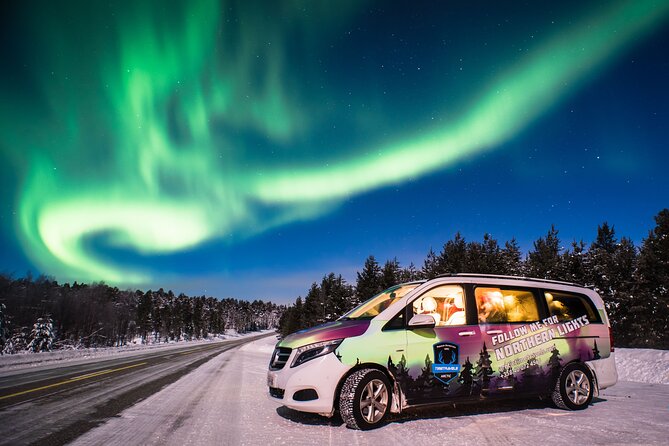
In Lapland, the aurora isn’t a fixed show time. It’s a moving target, and cloud cover can make your “best plan” useless in minutes. That’s why I like this setup: it’s short enough to stay efficient, but structured enough that you’re not wasting it by sitting in the same place too long.
You’ll spend about half the time at the first area and then shift into aurora-hunting mode in the direction of Inari. The time also includes travel, so you’re not mentally budgeting extra hours outside the stated duration. In other words, you get a clear expectation of what 3 hours can realistically cover.
You can also read our reviews of more tours and experiences in Saariselka.
Getting picked up near Saariselkä without turning it into a logistics puzzle
Pickup is offered, and the operator picks you up within 15 km of Saariselkä. If you’re staying in Kakslautanen, you’ll want to tell them whether you’re in the East or West Village so the driver can route you correctly.
This matters because aurora nights are already tiring—cold, dark roads, and short windows of better conditions. When pickup is handled for you, you can focus on staying warm and paying attention to what the guide is watching for rather than trying to coordinate last-minute ride changes.
You’ll also get a mobile ticket, and the tour confirmation arrives at booking. And yes, it’s listed as being near public transportation, which is useful if you’re not doing pickup for some reason.
Stop 1: Saariselkä for aurora basics, photo moments, and hot drinks
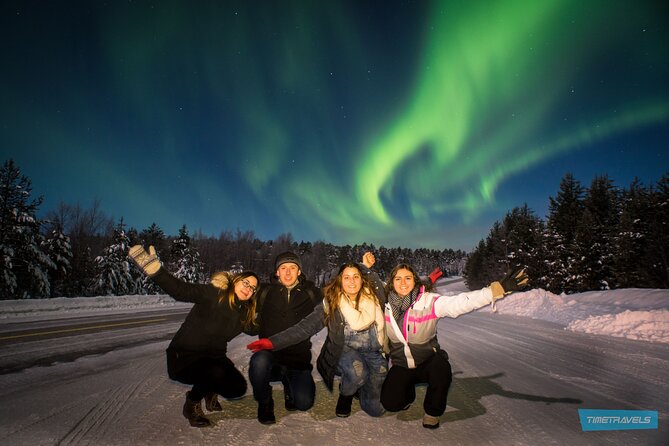
Your first stop is Saariselkä, where you’ll have around 30 minutes to get oriented and start photographing the natural scenery. This isn’t just “go stand there and hope”—the guide helps you understand what you’re looking for and how to react when the sky shifts.
I like this start because it gives you two practical advantages. First, it helps you spot patterns faster when the lights appear, even if they’re subtle at first. Second, you get time to warm up with hot drinks while you learn. In Finnish winter, that warm drink isn’t a small detail. It’s the difference between enjoying the night and feeling like your hands quit the tour early.
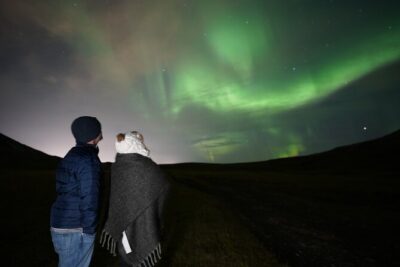
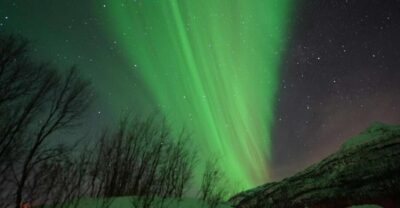
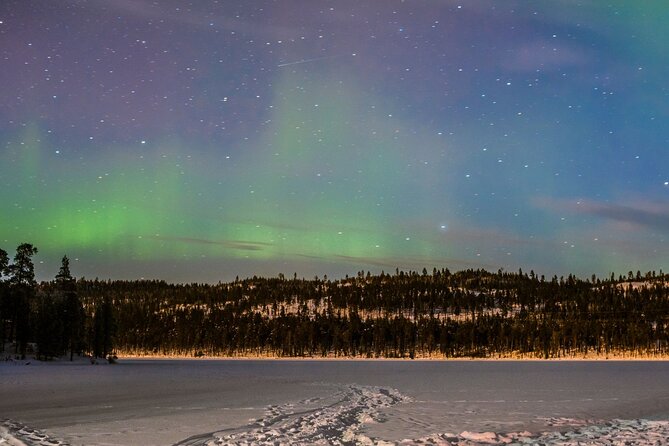
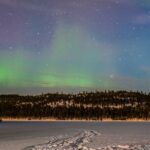
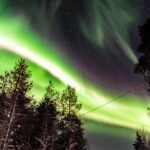
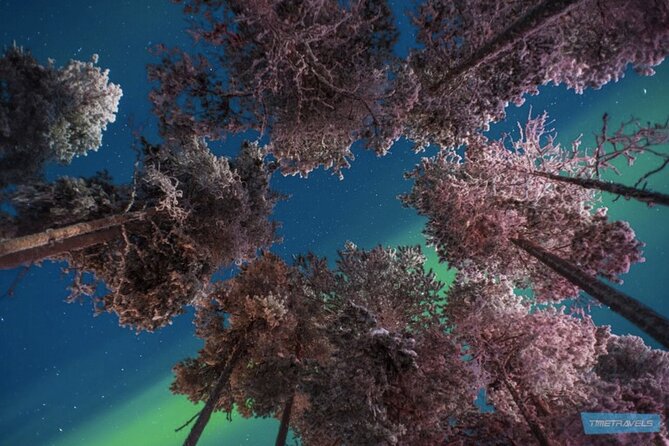
Photo note: even if the night’s conditions aren’t perfect, you’ll still get a chance to practice framing—tree silhouettes, the dark horizon, and the way auroras can appear as curtains or more faint movement.
Stop 2: Inari-area chasing where clear skies can appear “just over there”
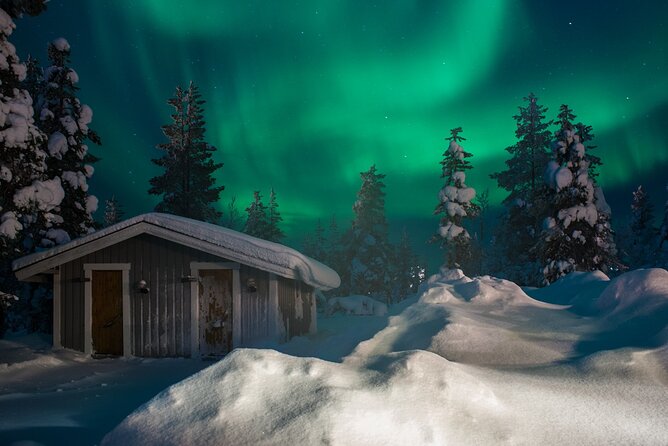
After Saariselkä, the tour shifts toward Inari. This is where the hunting gets serious.
You’ll search for auroras and clear skies, and the guide uses forecasts that can change rapidly. Instead of locking you into fixed coordinates, the tour visits at least three locations away from artificial lights. That’s a big deal. Light pollution doesn’t just “dim” the aurora—it can make the difference between seeing faint movement and spotting nothing at all.
One more thing I appreciate: you don’t get a rigid promise of exact stop locations. The guide adjusts on the go to increase your chances. That can feel odd if you like certainty, but it’s actually the smart strategy for Lapland weather—because you can’t out-think clouds, you can only out-move them.
Guides make the difference: Ivan, Walter, Centti, Karoliina, Nico, Eugene, and Lena
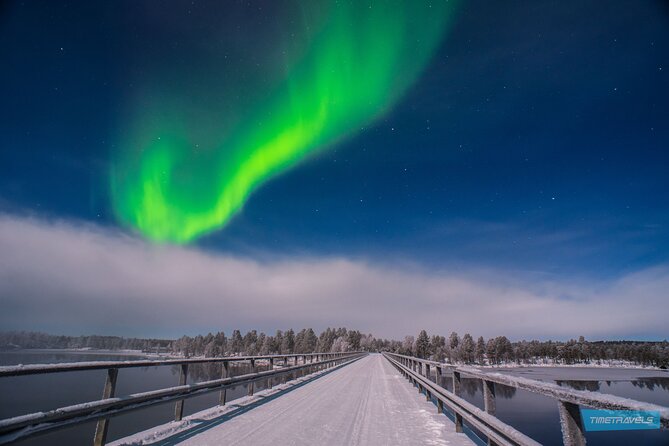
A lot of aurora tours claim they know where to go. What separates a good night from a frustrating one is how the guide handles the time you spend waiting.
From guest accounts, the guides on this tour can be deeply persistent and proactive. Names that come up again and again include Ivan, Walter, Centti, Karoliina, Nico, Eugene, and Lena. People describe guides driving to improve conditions when the first attempt isn’t working, and sharing what they’re doing as they watch the sky.
You’ll also get help with the human side of winter reality: staying comfortable during very cold periods. In one experience, the temperature was around -26°C, and the guide still kept things organized with warm drinks and practical patience. That kind of hosting doesn’t just feel nice—it keeps you alert enough to actually notice what’s happening in the sky.
Group size: small enough to feel personal, big enough to share info
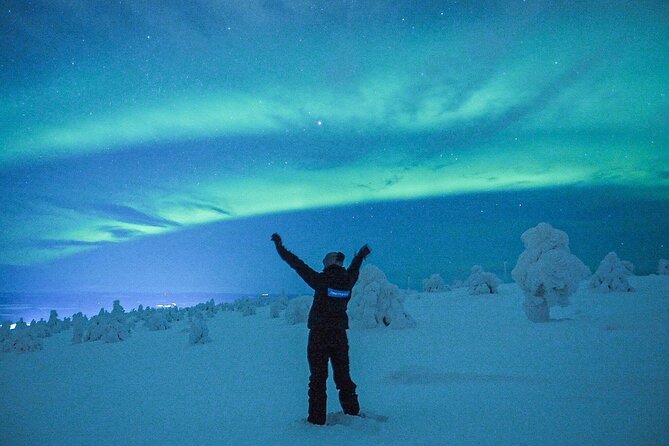
This tour caps at 20 travelers. In practice, it can feel like a tight group—some nights have been described as small groups in a minivan setting, with up to eight people. Either way, the size is small enough that you’re not stuck behind 30 shoulders, and the guide can keep track of who needs warmth, who needs a photo angle, and who wants updates.
There’s another subtle benefit: when groups are small, you can get a clearer rhythm. You don’t feel like cattle lining up. You can adjust your stance, camera settings, and patience without the whole operation feeling chaotic.
What you get for your $167.74: value beyond the driving
At $167.74 per person, this tour isn’t the cheapest way to chase the aurora. I look at it as value for three reasons.
First: the tour buys you effort. A guide is the “mobile brain” of the night—using forecasts, driving to multiple locations, and trying to outsmart cloud cover. You can’t easily replicate that alone without time, local insight, and planning.
Second: the warm-up part is real. You get hot drinks, and multiple guests describe things like hot berry juice and cookies. That sounds simple until you’re standing outside in darkness for stretches. Food and warmth keep your body from turning the experience into a survival test.
Third: you’re paying for coaching, not just transportation. The guide explains auroras and helps you with the photo experience at the first stop. Some guests even mention that their guide personally helped with photography using DSLR equipment and shared data. That’s not something you should assume every night, but it does suggest a hands-on approach when conditions allow.
Timing: how 3 hours actually plays in the dark
This is an approx. 3-hour tour, and travel time is included in that total. So you’ll be moving in the middle of the night, with shorter stops punctuating the drive.
That can be good news if you’re on a schedule. It’s also a good sanity check: you shouldn’t plan to do a long, multi-stop expedition and then expect a second big activity right after. Aurora nights run on fatigue management.
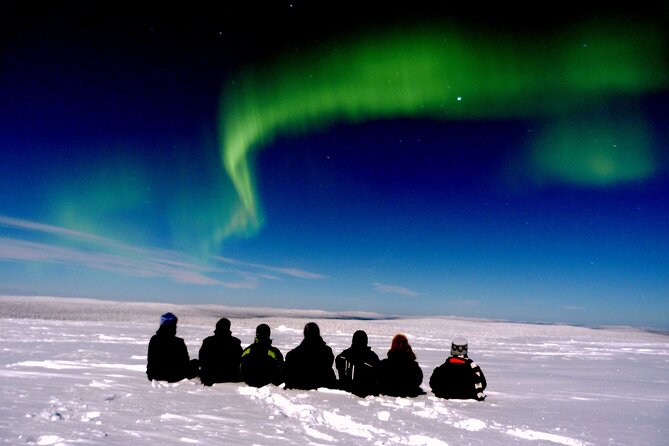
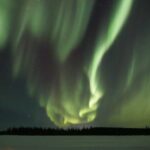
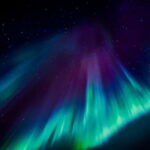
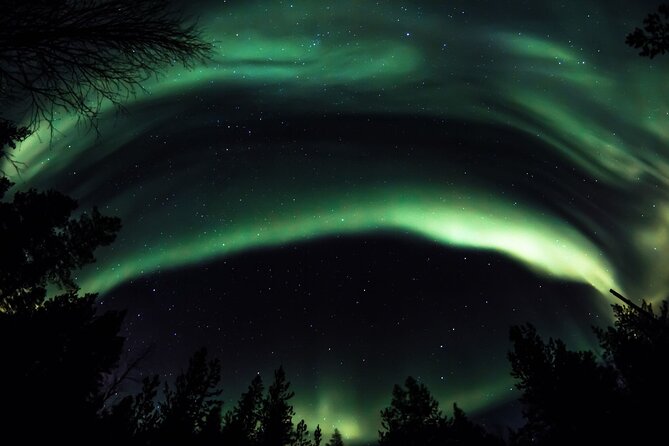
A common pattern you’ll experience is: arrive, scan the sky, wait through moments when nothing changes, then suddenly the aurora does something you can’t ignore—like curtains of light or clear, moving shapes. Some nights are faint. Others turn into something closer to a show.
When the aurora is weak: you’ll still get a Finland night
I won’t sugarcoat it: some nights don’t deliver strong Northern Lights. But even then, the tour can still be worthwhile.
In at least one experience, when auroras were not visible because the region was clouded, the group still had fun in the woods with a fire and visited something like a non-frozen river area. Another account notes a sky full of stars even without strong lights.
So if you’re coming for the aurora only, prepare for disappointment. But if you enjoy winter atmospheres—dark skies, quiet forest moments, and a guide who keeps working the plan—you’re still likely to come away feeling like your time wasn’t wasted.
Photography tips that fit this tour’s style
Because the tour mixes learning and stop hopping, you’ll get the most out of your camera if you keep your expectations realistic and your process simple.
- Focus on stability first (a tripod or a steady support helps).
- Be ready to shoot when the aurora shifts fast; you won’t have time to overthink every setting.
- Watch the horizon and tree line during waiting moments—faint auroras can hide in plain sight.
- Keep your hands warm. Cold fingers make camera buttons feel like enemies.
The first stop is where photo guidance tends to be most useful. Use that moment to get your bearings so you’re not figuring things out while the sky is actually doing something.
Is this tour worth it for you?
This one fits best if you want:
- a short, guided aurora plan from Saariselkä
- the ability to move to darker areas instead of relying on one fixed spot
- an English-speaking guide who explains what you’re seeing
- warm drinks and structured time outside, not a wandering free-for-all
I’d pass or rethink if you’re the type who needs exact stop locations, or if you only want a guaranteed “lights on” night. The whole approach is designed around weather uncertainty—because that’s the real boss fight in Lapland.
Should you book?
If your goal is your best shot at seeing the Northern Lights from Saariselkä without spending a day on planning and guesswork, I think this is a strong choice. The combination of hot drinks, aurora guidance, and active relocation to reduce light pollution makes the night feel purposeful—even when the aurora is shy.
Book it when you can treat the experience like a night out in winter (not a factory for green lights). You’ll enjoy it more when you dress for the cold, stay patient, and let the guide do the route thinking.
FAQ
How long is the Aurora Photography Tour?
It’s scheduled for about 3 hours total, and that includes travel time.
Where does the tour start, and do they offer pickup?
The tour is based in Saariselka, Finland, and pickup is offered within 15 km from Saariselkä. You can choose a pickup place from the list or add your own, and if you’re in Kakslautanen you’ll be asked whether you’re in the East or West Village.
What areas do you visit during the tour?
You start around Saariselkä, then you head toward the Inari area to search for auroras. The guide uses forecasts and visits multiple locations away from artificial lights.
How many stops are there in the hunt for auroras?
During the Inari portion, you visit at least 3 locations to increase your chances. The exact stop locations can change based on conditions.
Is the tour in English, and how big is the group?
The tour is offered in English. There’s a maximum of 20 travelers.
What happens if the weather is bad?
The experience requires good weather for the best chances. If it’s canceled due to poor weather, you’ll be offered a different date or a full refund.