REVIEW · SAARISELKA
Inari: Northern Lights Hunt Snowmobile Safari
Book on GetYourGuide →Operated by Lapland Welcome Ltd. · Bookable on GetYourGuide
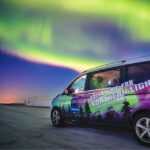
Snowmobile night plus aurora hunting? That’s a special combo. You’ll ride through the dark Arctic forests on purpose-set tracks and aim for a viewing spot where the north horizon stays truly black for better Aurora chances. It’s not just a ride with a sky break; the whole timing and route are built around seeing lights when the sky cooperates.
What I like most is how the experience sets you up to actually drive—there’s a briefing and hands-on guidance—so you’re not white-knuckling the whole night. I also love the focus on darkness: you’re taken away from other lights so the aurora (when it appears) has real room to show itself.
One consideration: the Northern Lights are never guaranteed, and this is a cold, high-risk activity. Guides do their part, but if you don’t want to deal with minus temperatures or you’re not comfortable with winter driving, look for a calmer alternative.
In This Review
- Key highlights you’ll feel fast
- Why Inari’s dark horizon is built for aurora hunting
- How the 5-hour snowmobile-and-aurora night flows
- Driving a snowmobile at night: what you truly need to know
- The tepee/hut camp stop: warmth, stories, and real “pause time”
- Aurora reality check: odds, sky references, and what to expect
- What’s included in the $199 price—and why it can feel fair
- What to pack (and what not to do) for minus-degree driving
- Who this Inari safari suits best (and who should skip it)
- Should you book this Northern Lights Hunt Snowmobile Safari?
- FAQ
- What time does the Inari Northern Lights hunt start?
- Do passengers need a driver’s license?
- Is seeing the Northern Lights guaranteed?
- What’s included in the $199 price?
- Can I drive the snowmobile alone?
- What should I bring, and what’s not allowed?
Key highlights you’ll feel fast
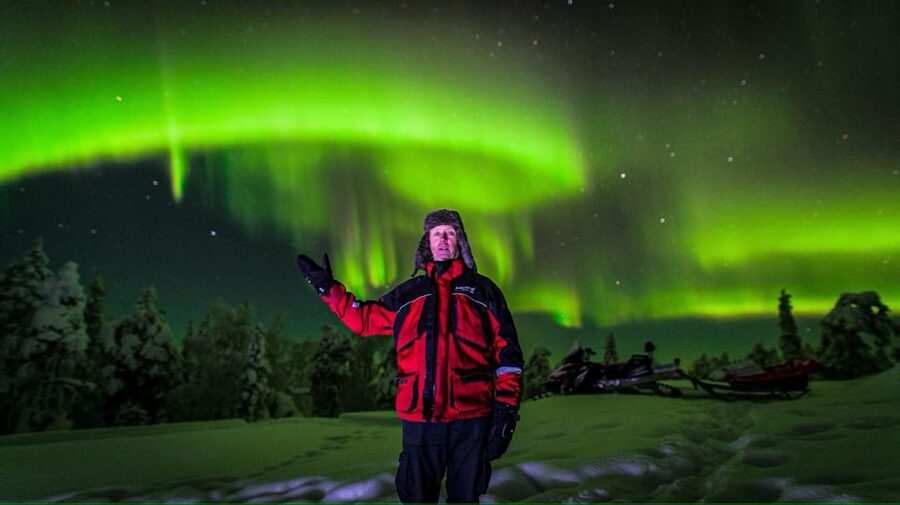
- Snowmobile training on special tracks so night driving doesn’t feel like guesswork
- A near-lightless aurora horizon where the sky stays fully open
- Camp warmth by fire with warm beverages and hearty barbeque snacks
- Guides who prioritize safe cold-proofing, layering tips included
- Aurora odds around 90% on clear evenings, with room for luck
- Photo-friendly darkness—great visibility for sky watchers and camera users
Why Inari’s dark horizon is built for aurora hunting
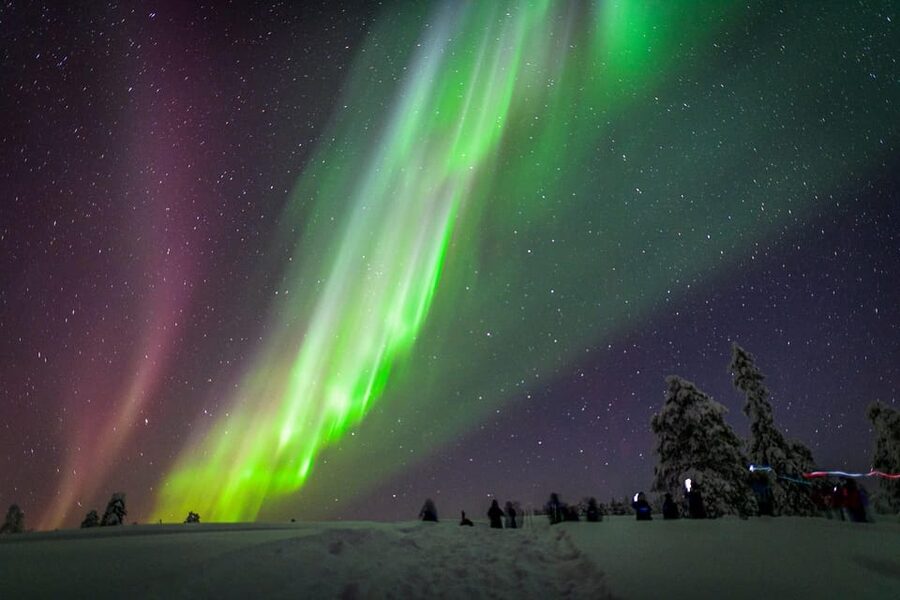
Inari works for aurora lovers for a simple reason: it’s one of those places where you can get away from city glow and still keep your bearings. This tour aims for an area with no other lights around, which matters more than people expect. Aurora can look weak if you’re fighting streetlights and windows. Here, the sky has space.
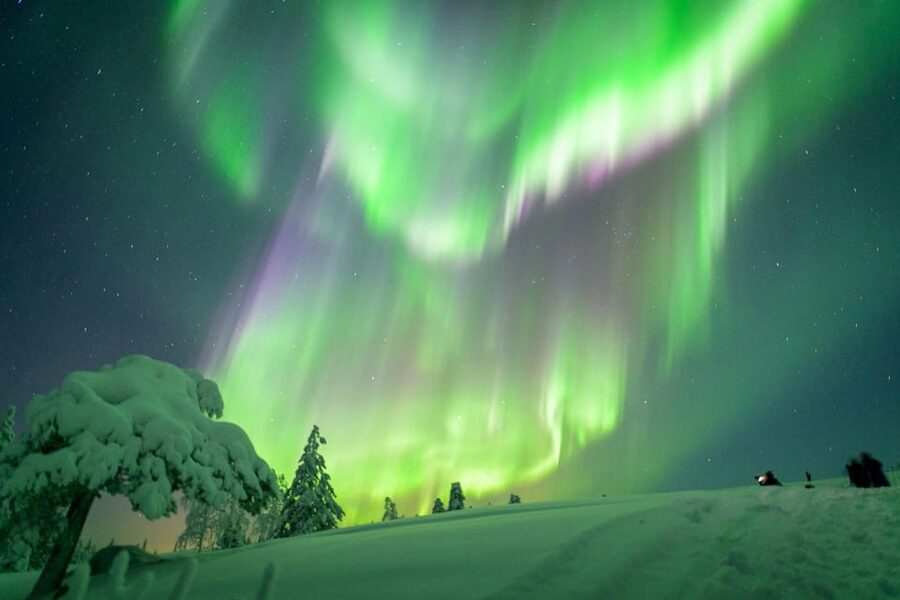
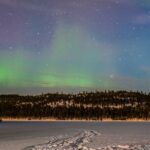
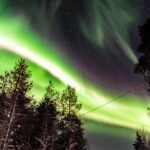
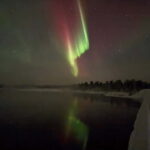
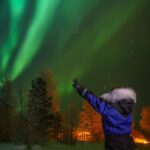
You’ll also be watching the sky from a fully open northern horizon, which is exactly what you want when you’re trying to spot faint color first. The tour’s aurora approach is very practical. Your guide will point out what to look for—like the Big Bear and Polar Star. Northern Lights are often reported to appear just under the Polar Star, so once you learn the reference point, your eyes stop searching blindly.
Timing helps too. The best chances are usually out around 11–12 PM, and the tour route is organized so you’re not just arriving at midnight and hoping. Since you start earlier, you have time to get settled, warm up, and be positioned when aurora activity tends to show. Still, you need luck. The tour team can’t switch off weather.
You can also read our reviews of more tours and experiences in Saariselka.
How the 5-hour snowmobile-and-aurora night flows
This is a 5-hour experience, and it feels longer in the best way because you’re doing two things: driving through the dark wilderness and then slowing down to watch the sky.
It usually starts in the evening:
- In November–March, it starts at 8:00 PM
- In April, it’s 9:00 PM or 10:00 PM (they confirm the exact time)
- Pickup begins about 1 hour earlier than the departure, depending on your hotel location
A typical rhythm looks like this:
- Pickup and meeting point
You’re collected from your hotel. This matters because in Lapland at night, you don’t want to be dealing with finding roads, parking, and meeting schedules while you’re already cold and jet-lagged.
- Briefing and winter gear setup
Before you move, you get guidance on driving basics and safety. You also get winter clothes and boots as part of the experience, so you can focus on staying warm instead of renting or layering up on your own.
- Getting onto the tracks
Then it’s out into the dark. You’ll drive on purpose-selected routes designed for night aurora viewing. One of the thrills is how quiet everything feels once you’re surrounded by snow and trees and no artificial light. The snowmobile makes noise, but the world around it can feel almost silent.
- Arriving at the tepee/hut
At the camp stop, you warm up by a fire in a hut/tepee setting. You’ll enjoy warm beverages and barbeque snacks, with fire-time as the centerpiece.
- Aurora watching with the group
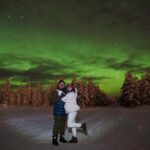
You’ll look up together. If lights appear, you’ll usually get time for photos and calm sky viewing. In some cases, people catch aurora on the way back as well.
- Return drive
The ride back can take time too, especially if the guide makes photo stops for sky conditions. That’s part of the trade: you’re not rushing through; you’re chasing the best viewing opportunities.
Driving a snowmobile at night: what you truly need to know
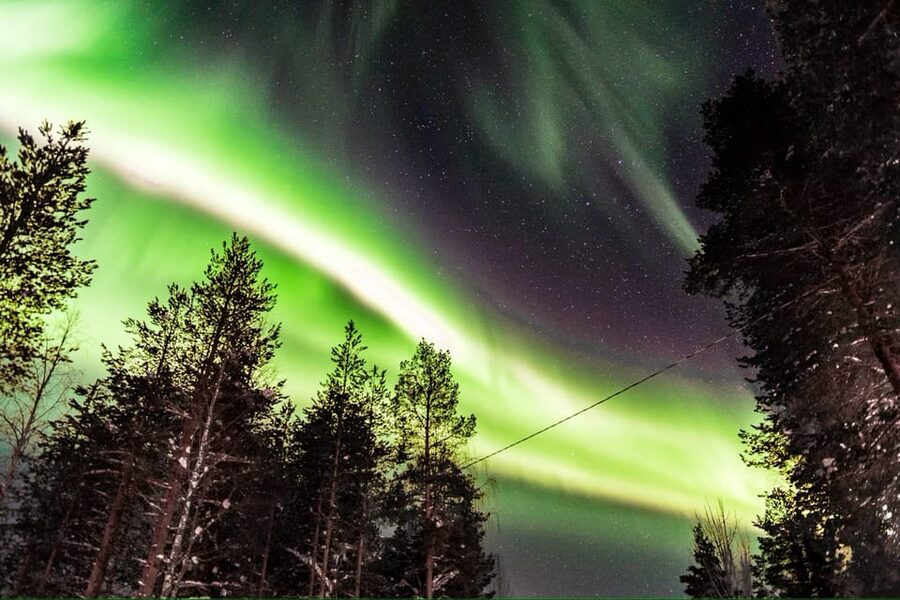
This is a snowmobile safari, so you do need a valid driver’s license if you want to operate the machine. Passengers don’t need a driver’s license, but solo driving is its own option and costs extra. If you’re going with someone who can drive, that can simplify things.
The good news: the driving basics are taught in a way that works. People describe the snowmobiles as easy to handle once you get the hang of it, but there’s a catch. First-time winter driving can feel tricky because braking, traction, and turning feel different on snow—especially in the dark. So don’t expect it to feel like your car right away.
Cold also changes everything. In real winter conditions, even with proper gear, your focus has to stay on what your guide is telling you. Several guests specifically noted how harsh temperatures can be and how helpful it is when the guide emphasizes using the provided equipment. One guest even mentioned it was around -20°C when they checked, so plan your layers as if you’ll be cold from the start.
Safety is taken seriously by the guides. Names like Sam, Marco, David, and Arvid appear in the accounts—each time, the theme is consistent: they help you dress for the cold, explain driving clearly, and keep you moving as a group in a controlled way.
The tepee/hut camp stop: warmth, stories, and real “pause time”
The camp stop is where the tour changes pace. You’ve been moving through the dark wilderness; then you reach a tepee/hut area with a fire and a chance to breathe.
What you’ll do there:
- Make a fire / gather by the flames
- Warm up with hot beverages
- Eat barbeque snacks (and in several experiences, sausages roasting by the fire is part of the moment)
- Listen to stories about local life and nature while you watch the sky
That storytelling piece is more valuable than it sounds. In a place where the environment is the main character, it helps to hear how locals think about the land, seasons, and animals. It turns aurora viewing from a grab-and-go photo task into a slower, more meaningful experience.
The other big win: the hut stop gives you a reset. Even if aurora doesn’t show right away, you still leave feeling like you did something specific to Lapland—night silence, fire warmth, and a sky full of stars once your eyes adjust.
Aurora reality check: odds, sky references, and what to expect
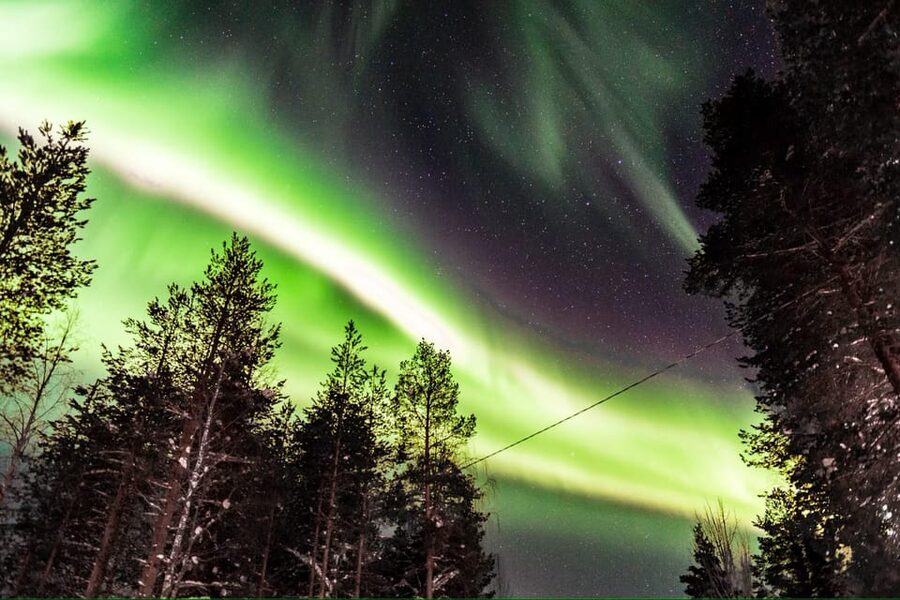
Here’s the truthful part: the Northern Lights are not guaranteed. The tour team sets expectations clearly. On clear sky evenings, lights are visible in about 90% of cases. But weather is weather. Snow, clouds, fog, and even timing can affect what you see.
What helps is that you’re positioned where the sky is open. You’re not looking through a foggy town glow. The area used for viewing is described as having a setup that often stays clear even when conditions elsewhere are worse, thanks to a local micro-climate effect. And because you’re staying outside for aurora hunting, you’re not stuck between indoor warmups and short drives.
If lights do appear, you’ll likely be able to track them more easily with sky points your guide teaches you:
- Big Bear
- Polar Star
- The idea that aurora often shows just under Polar Star
Also, the tour emphasizes the best hours for aurora hunting (around 11–12 PM). That doesn’t guarantee it, but it improves your odds compared with a shorter “show up and hope” approach.
For photos, you’ll want the right tools and habits:
- The tour specifically asks for a waterproof camera
- Have gloves ready so you can handle the camera without losing finger warmth
- Bring your patience—aurora can brighten, fade, and shift quickly, and you need time for your eyes and camera settings to catch up
What’s included in the $199 price—and why it can feel fair
At $199 per person for a 5-hour guided outing, the biggest value isn’t just the snowmobile. It’s the bundle: hotel transfers, a guide, winter clothes and boots, warm drinks and snacks, and equipment.
If you were trying to DIY it, you’d be juggling:
- getting to remote viewing spots after dark
- finding (and transporting) cold-weather gear
- arranging a driver-led route and safe winter navigation
- paying for instruction and on-site support
This tour takes those headaches away. You show up, get equipped, and follow a plan built for darkness and aurora hunting.
Two practical notes on cost and what’s not included:
- Solo driving costs extra. If you don’t have a driver-license holder in your group, this can change the final cost.
- Liability in case of accident is not included. That’s a reminder to read the terms carefully before you go out on snowmobiles.
What to pack (and what not to do) for minus-degree driving
You don’t need much, but what you bring matters. The tour expects you to come prepared for winter night temperatures and long cold exposure.
Bring:
- Comfortable shoes
- A hat
- Water
- A waterproof camera
- Gloves (even if you’re provided gear, plan to have your own)
From the rules:
- No pets
- No smoking
- No alcohol or drugs
- No alcoholic drinks in the vehicle
Those restrictions aren’t “for fun.” They protect everyone. When it’s cold and dark, safety decisions have less margin for error, and alcohol reduces that margin fast.
Who this Inari safari suits best (and who should skip it)
This is a thrill-plus-sky experience. It’s best if you want motion, darkness, and a guided hunt rather than just a bus ride to an aurora viewpoint.
You’ll likely enjoy it most if:
- you’re comfortable with winter conditions and layers
- you want to drive (and you have a valid driver’s license)
- you’re traveling with friends or a partner and you’re fine following a group pace
- you want both a camp stop and real aurora viewing from a dark horizon
It’s not a match if:
- you need wheelchair accessibility (it’s not suitable)
- you’re very elderly (people over 95 years aren’t suitable; it’s also described as not recommended for elderly people or small children due to high risk)
- you want something low-stakes and fully relaxed all night
- you’re traveling with pets
Also, keep your expectations grounded. Even with great conditions and good odds on clear evenings, the aurora still depends on the sky’s mood.
Should you book this Northern Lights Hunt Snowmobile Safari?
I’d book it if you want the full Lapland punch in one night: snowmobile driving, a camp fire break, and aurora hunting from a dark horizon. The $199 price makes more sense when you look at what’s included—transfers, cold-weather gear, boots, guidance, and food—because you’re buying fewer logistical headaches and more time outdoors.
Skip it if you’re hoping for guaranteed lights or if cold winter driving makes you uneasy. This tour is at its best when you’re ready for the dark, ready for the gear, and ready to accept that the sky runs the show.
If you’re still on the fence, choose this one when your priority is action. Choose a more relaxed aurora-focused option when your priority is comfort and lower intensity.
FAQ
What time does the Inari Northern Lights hunt start?
In November to March, the tour starts at 8:00 PM. In April, it starts at 9:00 PM or even 10:00 PM, with the exact time confirmed after booking. Pickup starts about 1 hour earlier for your hotel.
Do passengers need a driver’s license?
No. Only the person who drives needs a valid driver’s license. Passengers do not need one.
Is seeing the Northern Lights guaranteed?
No. The lights are not guaranteed. They are visible in about 90% of clear sky evenings, but aurora viewing depends on weather and conditions during the trip.
What’s included in the $199 price?
Included are hotel transfers, all equipment and winter clothes, boots, warm beverages and snacks, the snowmobile ride, a briefing, and an English-speaking guide.
Can I drive the snowmobile alone?
Solo driving is available for an additional price. If you don’t want solo driving, you can still ride as a passenger without a driver’s license.
What should I bring, and what’s not allowed?
Bring comfortable shoes, a hat, water, a waterproof camera, and gloves. Pets are not allowed, and smoking and alcohol/drugs are not allowed (including alcoholic drinks in the vehicle).