REVIEW · FAIRBANKS
Alaska Railroad Aurora Winter Fairbanks to Anchorage One Way
Book on Viator →Operated by Alaska Railroad Corporation · Bookable on Viator
Fairbanks to Anchorage by train is one long winter show. You’ll get unobstructed picture-window views of Denali when the timing is right, plus a scenic backcountry route that feels a world away from the highway. The train also includes friendly narration on board—useful in a place where “pretty” is really just the start. One catch: the train keeps interior lights on for safety, and that can create window glare for photos.
I like that it’s a straightforward one-way trip with reserved seating in non-smoking cars, baggage services, and options for snacks or dining without turning the day into a complicated project. It’s also a smaller group ride (up to 15 travelers), so the pace feels calm. Just be ready for a long day—departing at 8:30 am and rolling into Anchorage at 8:00 pm—then you’ll explore Anchorage on your own with lodging and activities booked separately.
In This Review
- Key Highlights You’ll Actually Notice
- A One-Way Rail Day From Fairbanks to Anchorage (8:30 am–8:00 pm)
- Reserved Non-Smoking Seating and How Getting On Usually Feels
- Following the Nenana River Through Healy Canyon
- Photo Reality Check: Glare Can Be a Factor
- Broad Pass: Alaska Range Views That Feel Like All Directions
- Hurricane Area Backcountry Moments: Indian River and a 296-Foot Bridge
- Denali Above the Susitna River and the Knik River Crossing
- Food on Board: Snack Bar and Optional Dining (With Timing Quirks)
- Wildlife Spotting and the Narration That Adds Meaning
- Comfort: Seats, Temperature, and the Long-Day Feel
- Price and Value: Is $259 Worth It?
- Who This Train Ride Is Best For
- Should You Book This Fairbanks to Anchorage Train?
- FAQ
- How long is the Alaska Railroad one-way trip from Fairbanks to Anchorage?
- What’s included in the ticket price?
- Is dining included?
- Do I need to book a seat in advance?
- What are the seating and car rules?
- Where do I meet the train?
- Is there anything I should know about tickets?
- Is this a small group ride?
Key Highlights You’ll Actually Notice
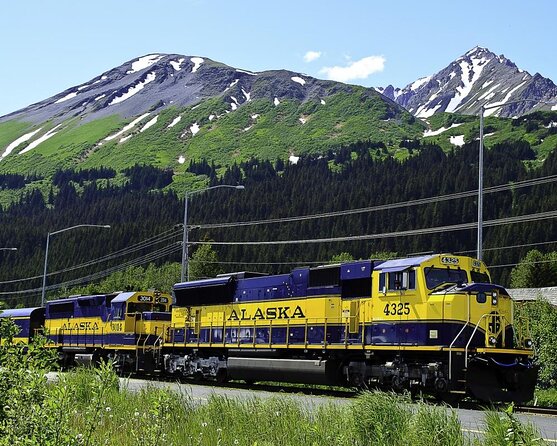
- Denali from the windows when the route aligns just right, especially south of Denali National Park
- Healy Canyon and the Nenana River curves give you that “real Alaska” sense of motion through winter
- Hurricane Gulch and the 296-foot bridge add a dramatic, backcountry-feeling moment
- Wildlife potential is real (moose, eagles, sheep, and more have been seen on this run)
- Onboard narration adds context without dragging out the day (and you may hear from conductor Vern)
A One-Way Rail Day From Fairbanks to Anchorage (8:30 am–8:00 pm)
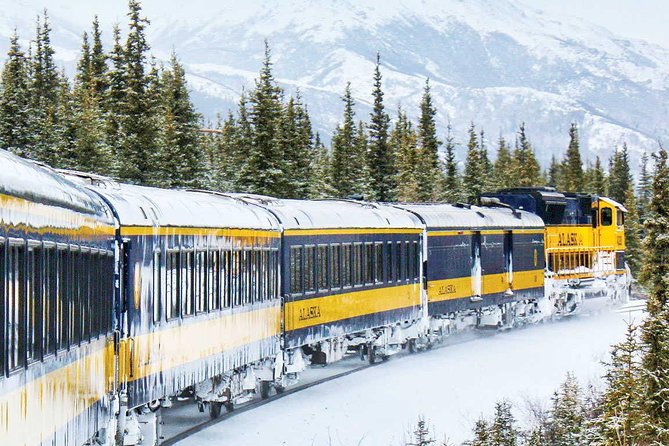
This is a single, focused train day: you leave the Fairbanks Depot at 8:30 am and arrive in Anchorage around 8:00 pm. The trip is listed at about 12 hours, and that full block matters because it means you’re not just “passing through” Alaska—you’re watching it change hour by hour from the same seat.
Also, this is not a packaged Anchorage day. Once you arrive, you’re on your own for exploring the city. That’s a benefit if you like flexibility, and a trade-off if you wanted a guided Anchorage itinerary included.
If your goal is to get south by the most scenic route, this one-way format is ideal. You also avoid the typical hassle of turning around and heading back the way you came.
You can also read our reviews of more tours and experiences in Fairbanks.

Reserved Non-Smoking Seating and How Getting On Usually Feels
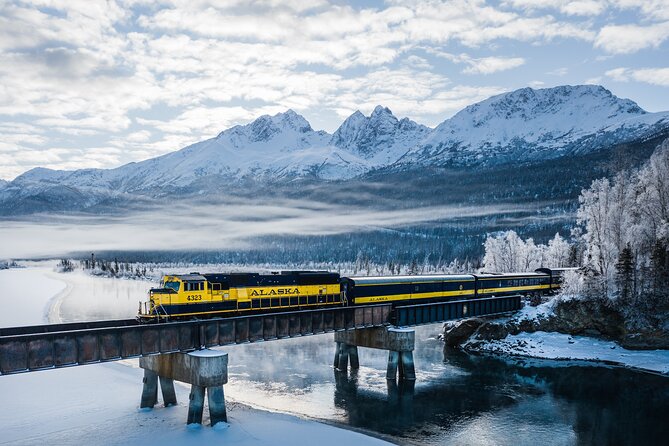
You’ll have comfortable reserved seating in non-smoking cars, and you can bring your gear thanks to baggage services. This is the kind of ride where you can check in, drop off bags, and settle fast—important when winter cold and long days are part of the plan.
Two practical notes:
- You’ll use a mobile ticket, and you’ll receive confirmation at booking.
- The group is capped at a maximum of 15 travelers, which usually helps the whole process feel less chaotic.
One more real-world perk: service animals are allowed, and the depot is near public transportation. That helps if you’re coordinating independently before or after the train.
Following the Nenana River Through Healy Canyon
North of Denali National Park, the train winds along Healy Canyon, following the curves of the Nenana River below. In winter, the river and canyon combo does something simple but powerful: it keeps creating motion and depth as the train rounds turns.
This part of the route is also where the train’s big windows matter. The description promises unobstructed views of Denali from the picture windows, and when the view lines up, it’s the kind of sight you notice instantly—big mountain shape against winter tones.
What you should watch for here is not just “a view,” but changing angles. The river curves mean your angle to the ridges shifts constantly, so you get more variety without moving a muscle.
Photo Reality Check: Glare Can Be a Factor
A repeated theme from the experience is that interior lights usually stay on. That can ruin some photo angles with glare or reflections, even if the outside scenery is stunning. If you’re serious about photography, plan to shoot quickly when reflections are minimal, and accept that the best shots might be fewer but more intentional.
Broad Pass: Alaska Range Views That Feel Like All Directions
Once the route is south of Denali National Park, you get Broad Pass views—majestic, and described as visible in all directions. This is where the day shifts from canyon-and-river “follow the line” scenery into more open, panoramic mountain sight.
Even when it’s snow-bright outside, winter mountains can look different every hour—shadow depth, ridge contrast, and cloud cover all change the read of the range. Broad Pass is the kind of segment that makes you stop thinking of the train as transport and start thinking of it as your viewing platform.
Hurricane Area Backcountry Moments: Indian River and a 296-Foot Bridge
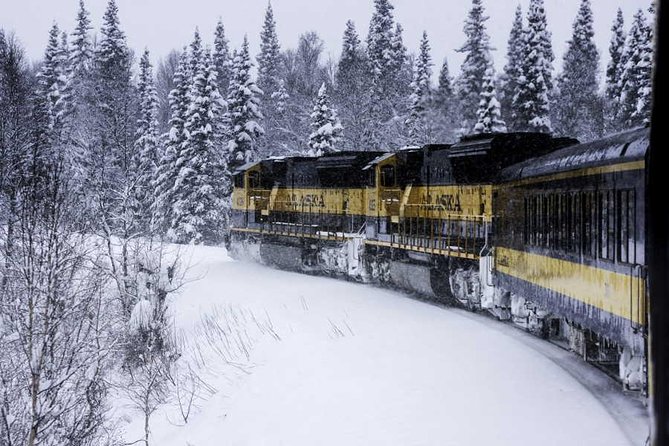
As the train continues, it moves away from the road system into the Hurricane area, giving you a more remote, backcountry feeling. Between Talkeetna and this stretch, watch for views of the snaking Indian River, occasional remote cabins, and a wider sense of space.
Then comes one of the most specific and memorable pieces of the description: the train crosses a 296-foot bridge with expansive views of Hurricane Gulch from the top. Even if you’re not a “bridge person,” this is a big deal because elevation changes your perspective fast. You’re looking out over a bigger patch of the region than you would from ground level, and that makes the winter scale feel real.
This is also where you can feel the difference between “city to city” and “Alaska to Alaska.” You’re not rushing past—Alaska is moving past you.
Denali Above the Susitna River and the Knik River Crossing
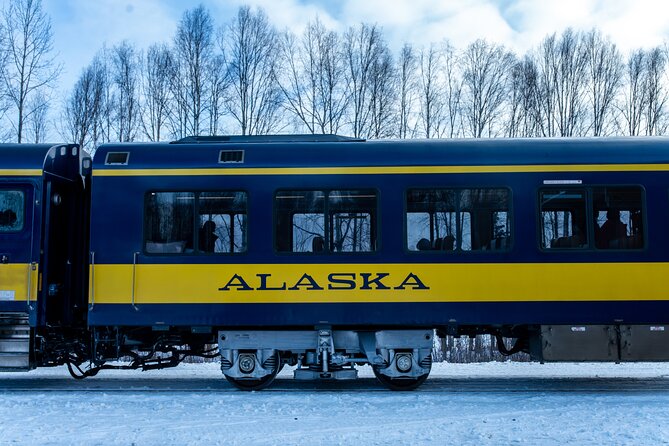
Just south of Talkeetna, the train route is set up for a standout viewing moment: you can watch Denali rise high above the Susitna River. That “rise above” matters. In winter, mountains can look flat or distant from certain angles, but when they pop up above a river plain, they suddenly look closer and more layered.
Later, traveling between Talkeetna and Anchorage, the train crosses the Knik River with the Chugach Mountains in the backdrop. That gives you a nice change of scenery as the day approaches Anchorage—a shift from the Denali-area drama toward a landscape with different mountain character and closer-to-settlement geometry.
This is the part of the ride where you start noticing light changes and the way the train’s speed and turns create a rhythm of views. If you’re the kind of person who likes to “scan and wait,” this segment rewards patience.
Food on Board: Snack Bar and Optional Dining (With Timing Quirks)
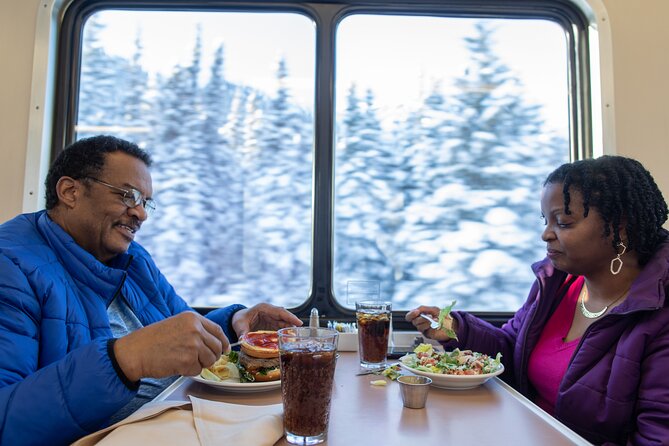
Food is not included in the base price. The train offers a snack bar and optional dining available for purchase, which keeps flexibility in place—great if you want light snacks and don’t want to plan your day around meals.
Here’s the balanced truth from the experience quality you can get onboard:
- Many riders describe the dining as excellent and worth the wait.
- But one detailed account shows meal timing can be slower and staggered depending on dining arrangements tied to seating/cart groupings. In that case, breakfast, lunch, and dinner started much later than you’d expect if you’re used to quick service.
So what should you do? Bring snacks just in case you’re hungry before dining hours, and treat meals as part of the train’s schedule—not something you can force to match a strict plan.
Wildlife Spotting and the Narration That Adds Meaning
This is one of the best reasons to pick the train over a flight. You’re sitting in place for hours with a big window view and enough time for wildlife to become part of the day.
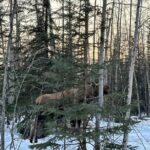
On this route, a wildlife-focused ride report included sightings like moose, bald eagles, sheep, a coyote, a snowshoe hare, ptarmigans, and a possible hawk. Wildlife won’t show up on command, but the odds feel better when you have long viewing windows and the train keeps moving through varied terrain.
Add to that the onboard information. Commentary is described as intermittent—helpful rather than constant—and conductor narration can turn the ride from pretty to meaningful. One rider specifically mentioned conductor Vern, who added fun and information. Even if you don’t catch the same person on your departure, the format is set up for context and questions.
If you like learning while you ride, this is a win.
Comfort: Seats, Temperature, and the Long-Day Feel
The ride is long, so comfort matters. Many riders call out comfortable seating and a good cabin temperature. That’s not a small thing when winter outside is doing its best impression of the Arctic.
You’re also traveling in a reserved-seat setup, so you aren’t stuck hunting for space the way you might be on a general open seating model. The combination—reservation + non-smoking car + comfort—makes it easier to settle in for the full 12 hours.
Even so, plan your day like a winter road trip. Bring layers, keep your essentials easy to reach, and give yourself a way to stay entertained besides just photos.
Price and Value: Is $259 Worth It?
At $259 per person for a one-way trip that lasts about 12 hours, the value depends on what you compare it to.
If you’re thinking flight: you’re trading speed for time and scenery. A flight gets you south fast, but it won’t offer the sustained backcountry viewing, the bridge perspective, or the long window time that makes wildlife spotting possible.
If you’re thinking “bus or driving”: a train feels easier and more relaxing. You don’t have to focus on roads or weather. You can watch the route unfold and let Alaska Railroad do the heavy lifting.
What’s not included is also part of the value equation. Lodging in Anchorage, local activities, and transportation after arrival are on you. Since the arrival time is around 8:00 pm, your Anchorage plans should account for a late day.
Also, optional dining means you can manage your spending onboard, but you should still budget a little extra if you want full meals.
Finally: this trip is described as commonly booked ahead, with a typical booking window around 44 days. If this matters for your schedule, don’t wait until the last minute.
Who This Train Ride Is Best For
This one-way winter ride fits best if you want:
- Big views and long window time, not just a quick transit
- A chance at wildlife sightings during daylight hours
- A calm, reserved-seat experience with onboard narration and helpful staff
- A more “Alaska-shaped” route rather than a simple transfer south
It may be less ideal if:
- You’re extremely focused on photography and need glare-free windows all day (interior lighting can interfere)
- You’re very sensitive to meal pacing onboard, especially if you expect fast, fixed meal times
- You don’t want a long day that ends with Anchorage on your own
Also, children must be accompanied by an adult, and it’s a smaller-group experience (up to 15). That can feel nice for families and mixed ages.
Should You Book This Fairbanks to Anchorage Train?
I’d book it if your heart says scenic winter Alaska and your brain understands it’s a full-day ride. The combination of Denali views, the backcountry feel around Hurricane Gulch, and the window time that makes wildlife possible is exactly the kind of “worth it” experience that’s hard to replicate in a hurry.
Don’t book it if your priority is strict meal timing or glare-free photography. And do double-check your Anchorage plan before you buy—because the train gets you there, and then you’re responsible for lodging and local activities.
If you’re ready for a long, comfortable ride with serious winter views, this is one of the best ways to travel south without leaving the good parts behind.
FAQ
How long is the Alaska Railroad one-way trip from Fairbanks to Anchorage?
It’s listed at about 12 hours, departing Fairbanks at 8:30 am and arriving in Anchorage around 8:00 pm.
What’s included in the ticket price?
You get one-way rail transportation from Fairbanks to Anchorage, comfortable reserved seating in non-smoking cars, baggage services, and optional access to the snack bar and optional dining.
Is dining included?
No. Snack bar and optional dining are available for purchase.
Do I need to book a seat in advance?
Yes, buying your tickets ahead of time helps guarantee your seat.
What are the seating and car rules?
Seating is reserved and in non-smoking cars. Service animals are allowed.
Where do I meet the train?
You’ll start at the Alaska Railroad Fairbanks Depot at 1031 Alaska Railroad Depot Rd in Fairbanks. The trip ends at the Anchorage Depot at 411 W 1st Ave in Anchorage.
Is there anything I should know about tickets?
You’ll receive confirmation at booking time, and the ticket is mobile.
Is this a small group ride?
Yes. The maximum number of travelers is listed as 15.